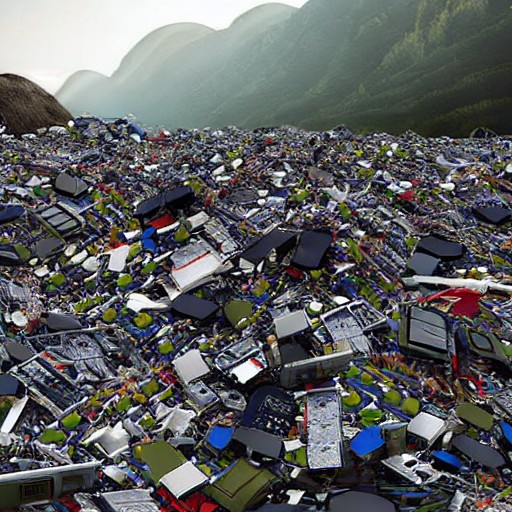
A new report warns that e-waste from AI is vastly underestimated and could fill 23 million shipping containers by 2050. Unlike previous studies, the authors factor in all infrastructure supporting servers in data centers, providing a broader, clearer picture of the junk AI leaves behind.
Less than a quarter of the world’s 68.3 million tons of e-waste is formally collected and recycled, with the rest often dumped into informal waste collection, exposing workers and the environment to toxic materials.
The US, with its extensive data center infrastructure, has not ratified the Basel Convention to limit hazardous waste trade, leading to the export of e-waste to countries where it is often improperly recycled. This informal recycling can pose significant health threats to local communities.
BAN predicts that e-waste will triple by 2050, with about 15 to 20 percent attributed to AI. This includes power supply, cooling systems, backup power, and networking equipment, as well as ‘AI Waste Contagion’ — encompassing everything from telecommunications to personal devices that become obsolete due to AI advancements.
Considering AI-related equipment retirement between 2025 and 2050, BAN expects 395 to 617 million metric tons of e-waste by then, adding 8.6 million to 13.1 million metric tons annually. This is a stark reminder that as AI grows, so does its environmental footprint.