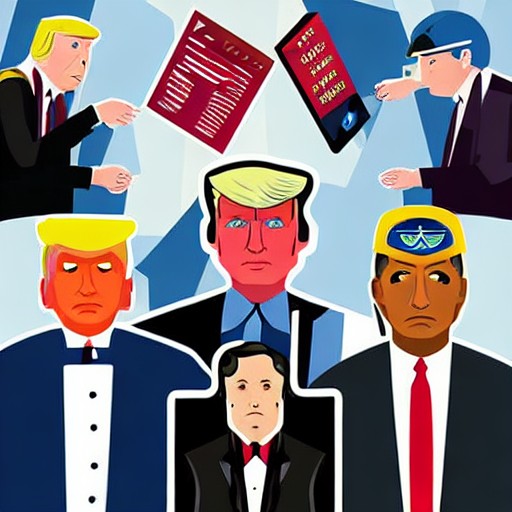
US President Donald Trump has unveiled a new taskforce, dubbed the 'Super Intelligence Force,' to oversee artificial intelligence policy. The force will be led by Director of National Intelligence Jay Clayton and includes key government officials such as Federal Trade Commission Chair Andrew Ferguson and Undersecretary of Defense for Research, Engineering Emil Michael.
The taskforce's mandate is to ensure the US remains at the forefront of AI development by coordinating with various stakeholders, including consumers, public interest groups, and religious organizations. Clayton, who previously worked as an US attorney, expressed that addressing AI as both an opportunity and a threat is essential.
The announcement follows a controversial executive order by Trump, changing the term 'artificial intelligence' to 'Super Intelligence' in official correspondence. This rebranding has sparked debate, with some experts questioning the logic behind the change. Top tech companies, including OpenAI and SpaceX, have already started using the new terminology.
As part of this initiative, Trump signed an executive order on September 29, instructing government departments to adopt 'Super Intelligence' in their communications. This move has been seen as an attempt to tighten regulation and ensure that AI development benefits the US economy and security. However, critics argue that self-regulation by tech companies is insufficient.
Despite calls for stronger oversight, Trump has largely left AI regulation to the tech industry. The new taskforce and the rebranding signify a significant shift in the US government's approach to AI, aiming to harness its potential while mitigating risks.