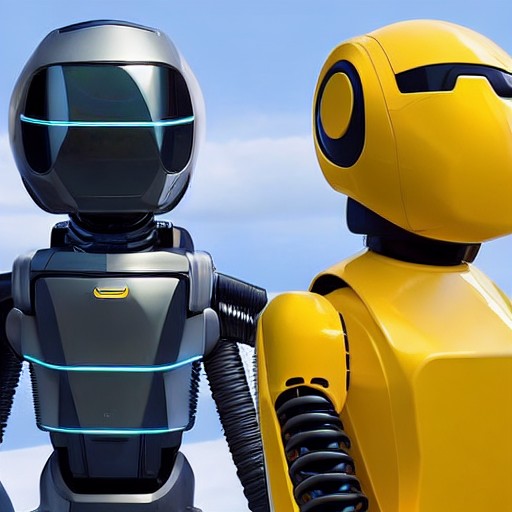
The challenge of making generative AI (GenAI) robots safe has become a top priority for robotics experts, with a new company called Safeworld aiming to tackle the issue.
Dr. Ding Zhao, director of the Safe AI lab at Carnegie Mellon University, has dedicated his career to this complex problem. Safeworld, co-founded by Zhao, Kyle Wong and Simo Rachidi, is now emerging from stealth with a $12 million seed round to develop safety standards for GenAI robots.
Their approach involves creating digital simulations of environments where robots operate, inserting realistic human models, and running thousands of scenarios to ensure the robots can react safely to unexpected situations. This method mirrors the rigorous testing faced by companies like Tesla in ensuring vehicle safety.
Despite the advancements, the unpredictability of human behavior remains a significant hurdle. For instance, the possibility of humans tripping and falling, or their varied physical appearances, adds complexity to the testing process. Vishal Dugar, CTO of Gritt Robotics, highlights the necessity of empirical testing to verify robot safety in industrial settings where humans and robots coexist.
The early stages of Safeworld and GenAI in robotics mean that the company is still refining its business model. However, the team is optimistic about their approach, believing they will be the first profitable company in this field.