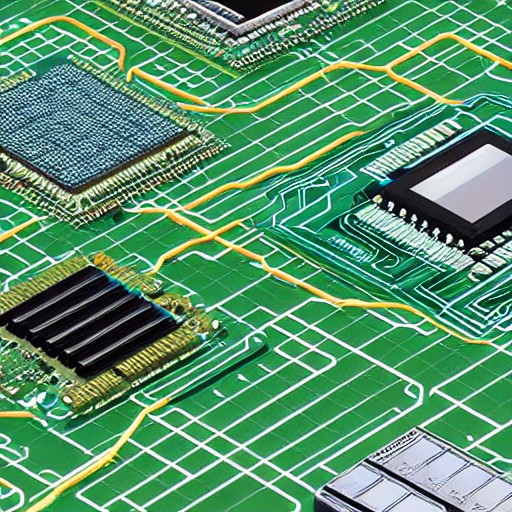
Google has expanded its in-house chip portfolio with two new variants of its TPU, designed specifically for confidential training and enhanced memory capacity. TPU 8tx is geared towards secure model training and on-the-fly distillation, while TPU 8i Max doubles the memory and processing power for larger workloads. This move comes amid increasing competition from rivals like Microsoft and Amazon, who are also developing their own AI-specific semiconductors. Google’s chips are designed to keep sensitive data protected and reduce reliance on external suppliers, marking a significant step in the tech industry’s ongoing hardware wars.
The launch of these new chips builds on Google’s eighth generation of TPUs, which were introduced in April. TPU 8tx, a collaboration with AMD, focuses on confidential training and running AI models, ensuring that sensitive data remains protected. The custom inferencing network in TPU 8tx allows for efficient training and reasoning, making it ideal for companies that need to train models on proprietary data without exposing it. Meanwhile, TPU 8i Max combines two inference-focused TPU 8i chips, doubling the memory capacity and processing power in a single package, making it capable of handling a broader range of information during queries.
With major players like Nvidia under scrutiny, this move by Google is part of a broader strategy to secure more control over the hardware that powers their cloud computing and AI services. As the race to develop proprietary AI hardware heats up, Google’s chips represent a significant step in reducing dependence on external suppliers and ensuring data privacy.






