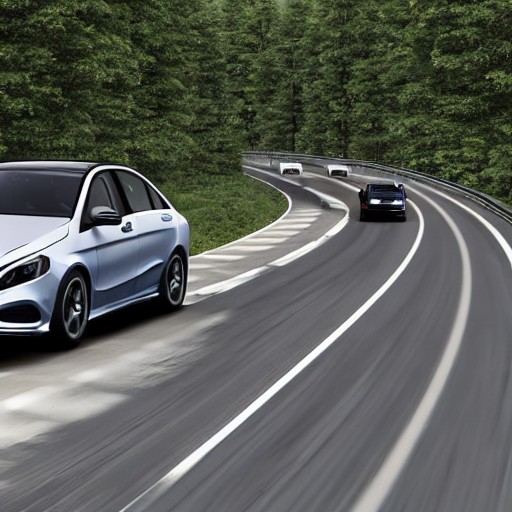
Mercedes-Benz is rolling out its latest driving assist, Drive Assist Pro, to vehicles running the new MB.OS operating system in the US and Germany. This technology, which collaborates with human drivers, marks a significant step towards partially automated driving. While other carmakers have dabbled in level 2 systems, Drive Assist Pro aims to handle complex traffic scenarios with ease, reducing driver fatigue on long drives.
With the car controlling braking, acceleration, and even steering in certain conditions, the distinction between level 1 and level 2 systems becomes blurred. However, the human driver remains the ultimate authority, ensuring situational awareness and responding to unexpected situations. This balance is crucial as the automotive industry moves closer to level 3 systems, where the car can take full control in specific scenarios.
The evolution from airbags to Drive Assist Pro highlights Mercedes' commitment to safety and innovation. As these advanced systems become more commonplace, questions arise about the evolving role of the driver and the potential for further automation. Will the future of driving be defined by the seamless integration of human and machine, or will we see a complete shift towards autonomous vehicles?
The key to success lies in the delicate balance between technology and human oversight. Drive Assist Pro’s geofenced highways and advanced driver monitoring systems are steps in the right direction, but the journey to fully automated driving is fraught with challenges. As Mercedes pushes the boundaries of assisted driving, it invites us to ponder the implications for our daily commutes and the broader implications for society.






