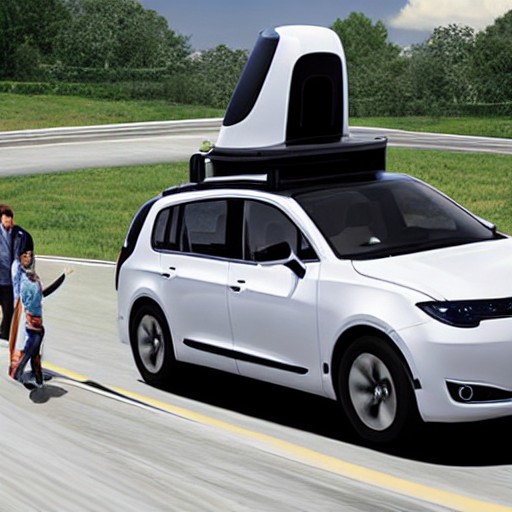
Waymo has unveiled a new computer model designed to more accurately assess how its autonomous driving software stacks up against human drivers. The research, published in Nature Communications, employs active inference theory, suggesting that drivers constantly imagine possible futures and take actions towards the safest outcomes.
This new benchmark will help Waymo better understand human behavior in crash scenarios, enhancing its robotaxis' performance evaluations. The previous model focused on last-second reactive maneuvers; the Reference Driver can simulate a driver’s internal surprise during conflicts, providing a more realistic comparison for autonomous systems.
Waymo claims that this model can adapt to represent a wide range of road user behaviors and evaluate complex crashes in virtual environments with unprecedented speed. This new approach is crucial as Waymo scales its services across multiple cities and faces increased regulatory scrutiny following a recent incident involving a child in Santa Monica, California.
The company hopes others will collaborate on improving this Reference Driver model, making the research code available under an academic, non-commercial license that allows for use in research, teaching, and scientific publication. With such advancements, perhaps the age of truly autonomous driving isn't far off — but who’ll be driving us to it?