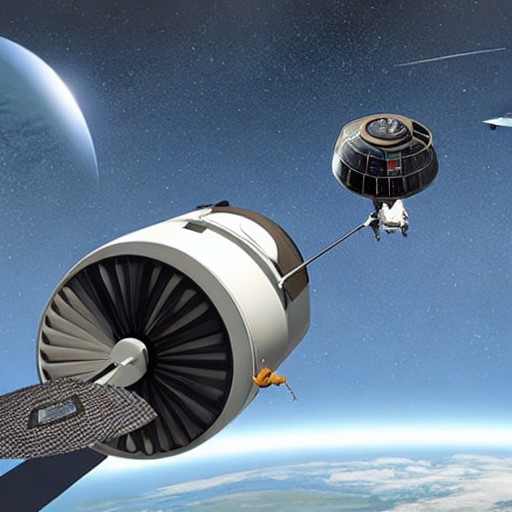
For the first time, an Earth observation satellite has found what it was looking for — on its own. Yam-9, built by Loft Orbital and powered by NASA’s Gemma 3 vision-language model, identified areas of interest without human intervention, marking a significant step towards autonomous space sensors.
This milestone is crucial for reducing the flood of raw data that analysts currently have to sift through, making satellites far more useful. In the long term, it could lead to always-on surveillance layers in orbit, monitoring borders and infrastructure with AI logic.
The demonstration showcases the capabilities of VLMs (vision-language models) running on edge applications, such as the Nvidia Jetson Orrin AGX GPU aboard Yam-9. While this is the first reported use of a VLM in orbit, other companies like Planet Labs and Kepler Communications are exploring similar AI applications.
Lessons from these smaller models will inform the deployment of larger-scale compute infrastructure in space, addressing the challenges of power and memory management. The potential for new scientific tools, such as digital assistants for astronauts, also emerges from this technology.


