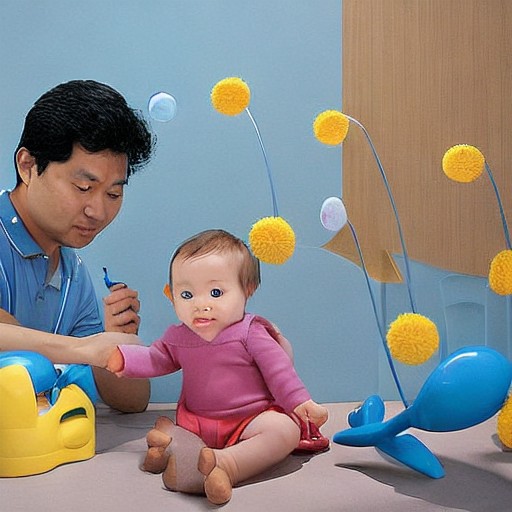
If you think an artificial intelligence model running on thousands of cutting-edge computer chips is smart, allow me to introduce you to the concept of a 1-year-old. Babies might not be able to write computer programs or solve advanced math problems, but they learn about the world with amazing efficiency.
Babies identify new objects after seeing them once or twice and learn through fleeting observation and physical interaction. This natural learning process could hold crucial insights for improving AI, making models less costly and energy-intensive, as well as more adaptable to their environments.
To explore this bold new frontier, researchers at Meta, Stanford University, the University of Tokyo, and France’s École Normale Supérieure developed a test that highlights the learning skills of babies. The EgoBabyVLM Challenge judges how well vision language models can make sense of the world as a baby sees it.
It turns out that cutting-edge models fail miserably when fed realistic and messy footage, which suggests there may be something different about the design of the baby brain that enables rapid learning from minimal information. Babies learn not just from language but also from a rich multimodal and tactile experience, says Michael Frank at Stanford University.
The test shows that when it comes to AI, 'it’s clear that there’s more than just language that’s needed,' Frank states. This is part of a broader effort by scientists using AI to explore human intelligence and how we learn. A challenge called BabyLM showed models do not acquire common sense about the physical world or social dynamics.