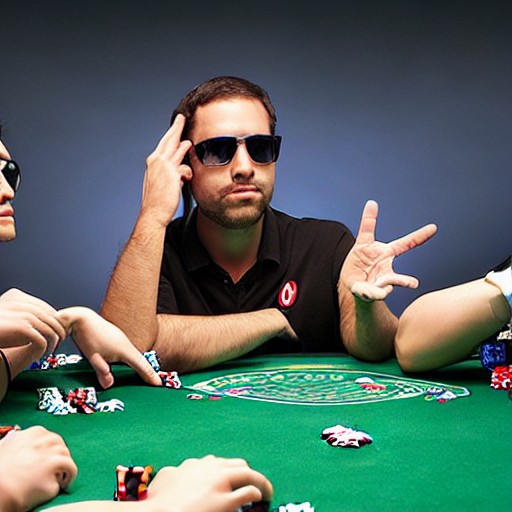
For serious poker players, the ability to sniff out an opponent’s intentions through their tells—subconscious gestures and movements—is nearly as important as the cards themselves. But could a new AI tool be replacing human intuition with machine precision?
The tool, designed by Luke Geel for ESPN during the 2026 World Series of Poker Main Event, provided live metrics on player movements and hand strength models based on camera inputs. While it may seem like a neat trick to some, scepticism abounds among poker experts who argue that even with advanced technology, replicating human subtleties is challenging.
Michael Gagliano, a 17-year professional poker player, found the tool’s data insufficient for real-time analysis. The small dataset used to train the AI meant there were not enough plays to reliably predict opponents’ hands, particularly as only about three tables were recorded over the tournament's two-and-a-half-week span.
Shaun Deeb, a WSOP Player of the Year and poker veteran, underlined that tells are more nuanced than simply observing physical movements. 'Physical tells are so much more expansive than I think the public realises,' he said. 'There are leg tells, checking tells, verbal tells, breathing tells, pulse tells. An AI can track visual and audio patterns but it can’t deduce intention; what a player is actually holding remains a mystery.'
While the tool may add an interesting layer of entertainment to broadcasts, its limitations highlight the complexity of human behaviour in poker. As Gagliano pointed out, 'How strong is two pair for one player versus another? Maybe someone is extra confident with a hand that’s actually weak for the situation.' The journey to understanding these subtleties continues.