While major motor shows in Europe and the United States are being forced to downsize or change their format, those in China continue to expand. The 2026 Beijing International Automotive Exhibition has become the largest auto show in history, reflecting a shift in the center of gravity of the automotive industry.
Previously, the focus was on low-priced electric vehicle models, but now price is no longer the primary point of competition. High-end EVs and large SUVs from Chinese manufacturers equipped with advanced driver-assistance technologies and AI functions are rapidly spreading to the lower price range. Lidar sensors and 'drive-by-wire' technology are now being incorporated into EVs costing less than 100,000 yuan (approximately $14,500).
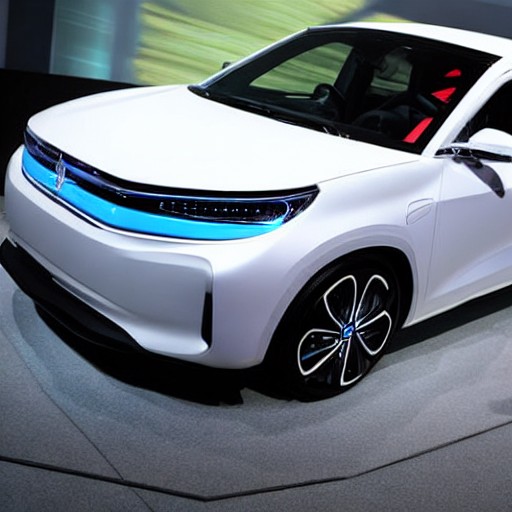
Chinese manufacturers’ cars offer many technologically impressive features. The XPeng GX is an example of a car designed for autonomous driving, with sensors, computing infrastructure, and AI models all built in. It boasts a total computing power of 3,000 tera operations per second—approximately 12 times the 254 TOPS that a single Nvidia Orin can handle. The Geely EVA Cab is another notable model designed for fully autonomous driving with no steering wheel or pedals and a layout with four seats arranged face-to-face.
Li Auto’s L9 Livis integrates drive-by-wire, four-wheel steering, and electromechanical brakes all without any mechanical or hydraulic connections. This represents a 'world first' in passenger car braking systems, thanks to China's new national standard which includes standards for electromechanical brakes. IM Motors showcased the IM LS8, a range-extended EV that features four-wheel steering, lidar, and high-performance driver-assistance systems, with a starting price of 249,800 yuan (approximately $36,700).