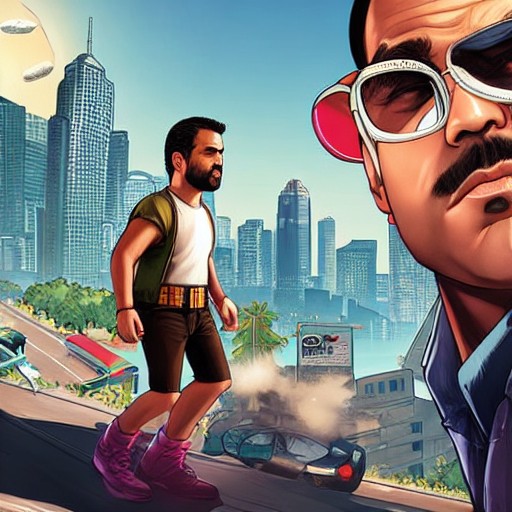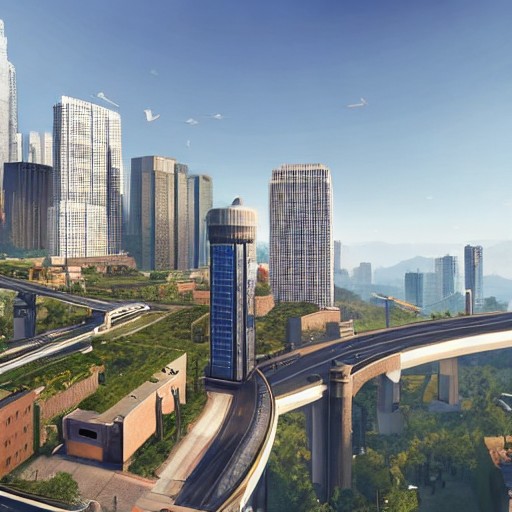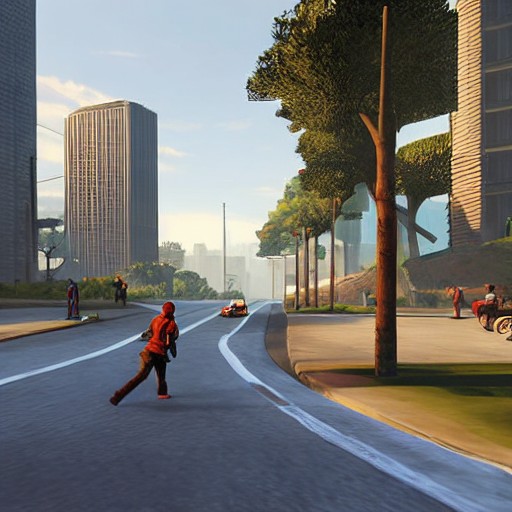
There are plenty of reasons why Grand Theft Auto VI is so popular: the 13 years of anticipation, the relatable lead characters and romantic storyline, the sheer level of depth. But another major factor is the sense of place. The GTA series is unmatched when it comes to re-creating the feeling of a bustling, real-world city, and GTA VI’s fictional rendition of Florida is the studio’s most lifelike setting yet. It has functioning buses and trains, plentiful buildings you can go into and explore, residents you can chat with, and huge areas where you can interact with wildlife far away from the bright lights of the Miami-like Vice City.
For Emma Fraser, an assistant professor at UC Berkeley who studies urban ruins and virtual cities, the sense of realism has created a unique sensation while playing. “There’s something about this particular game that is really discombobulating and distracting in a sense,” she says. “Because you have these moments where you think, ‘I’m in a place, I’m experiencing a location.’ You comprehend intellectually that it’s not real or that it’s at best a representation, but you still have this feeling in your brain and you’ll still dream about being in that place.”
Fraser teaches courses on topics including urban geography and virtual worlds and has written papers exploring topics like “mapping in the digital age” and “the virtual spectacle of the end of the city.” She says she started researching video game cities in part because, despite their influence and reach, they’re an underexplored space in academia. “I’m a geographer, and geographers are obsessed with cities,” she explains. “So much of geography is thinking about: How do we imagine cities? How do we navigate cities? How do we build cities? How do we map cities? And video games have all of that, but they’re not taken that seriously as an academic interest.”
Like much of the world, she’s been looking forward to GTA VI for years, particularly because of Rockstar’s on-the-ground approach to research. Before development on the game began, developers from the studio traveled to Florida to get an accurate picture. As GTA VI producer Rob Nelson told me, the starting point for the game was the setting, rather than the story or characters. “We just went around to feel it out,” he said. “Go to the Everglades, go to the Keys, go to the city, as many places as we can, and start thinking about what aspects of the place we want to incorporate.”
While there are plenty of open-world games, many of the most successful — from Elden Ring to The Witcher — are set in fantastical spaces. GTA stands apart in how its various settings look and feel true to the real world. And Fraser believes that this is one of the key reasons the series has such universal appeal. “You know immediately how to function in a city,” she explains. “You know there’s going to be law enforcement, there are going to be city blocks, there are going to be pedestrians, cars, and buses. It’s this really interesting environment that gives you a lot of possibilities to get a player more immersed in your world, because they already know a lot about a city as a general concept.”