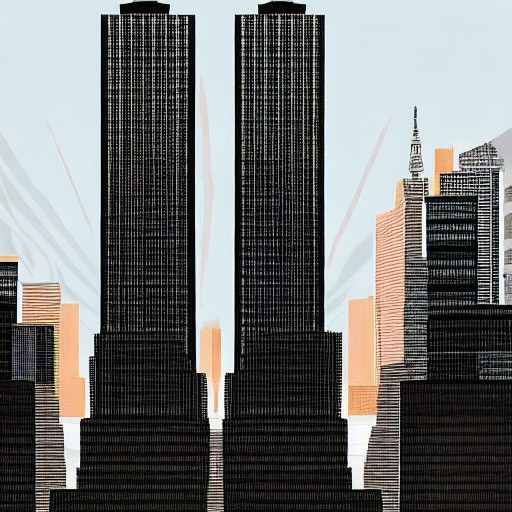
The struggle for immigrant rights and lives after 9/11 defined a generation of South Asian art and activism, even if it felt like trying to empty the ocean with a teaspoon. The Tribeca nightclub Vinyl, close to the Twin Towers, was a sanctuary until that fateful Tuesday. As the South Tower collapsed, the office’s satellite in the blast radius was evacuated, and the phone lines were jammed, leaving many in limbo.
HBO Television, where I worked, was a hub of activity. Amin Miah, a corner fruitseller, broke the news of the attacks, and as people tried to reach their loved ones, the phone lines were overwhelmed. My girlfriend Reiko and I biked down to Chambers Street to find her, as the city was in chaos. The first thing I said to her was, “Please, you have to get a cell phone.”
The next week, at a vigil organized by Sreenath Sreenivasan, I met comrades from South Asian activist organizations Youth Solidarity Summer (YSS) and Taxi Workers Alliance (TWA). Filmmaker Dina Hossain was hyper-aware of the loop of history as she finished a documentary about Leonard Bernstein and started a new project on Islam. We were all mourning together, but Dina warned, “You will understand that you and I are not going to be allowed to be part of that ‘we,’ not anymore.”
Mahmood Mamdani’s book Good Muslim, Bad Muslim would later reveal the complexity of our approach, which was to appeal to those in power. Our generation’s approach was to ask, ‘allow us to go about life in peace.’
I lived in Hell’s Kitchen and was sufficiently freaked out by the idea of “another attack” to want to move out of Manhattan. The landlord was thrilled at the chance to raise the rent. The Russian bouncer at the strip club next door looked at my moving truck and waved at me. He had a scar down his right eye and had ‘seen it all.’ I wondered if he was a veteran of the Chechen wars.