The Polish Pavilion at the Venice Biennale has redefined access, with installations that engage visitors through sound, not as an afterthought, but as the core of the experience.
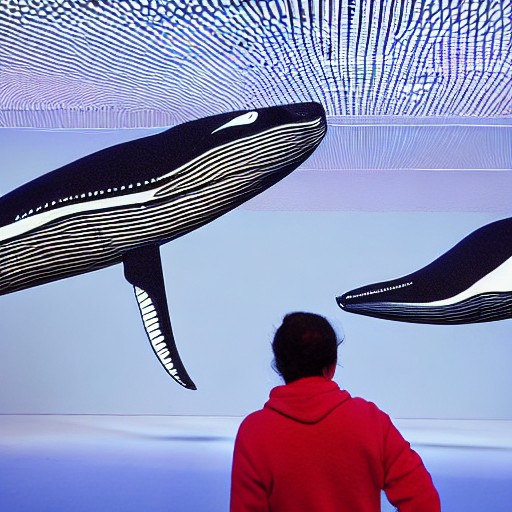
Curated by Ewa Chomicka and Jolanta Woszczenko, the exhibit 'Liquid Tongues' submerges visitors in a soundscape of whale songs and low-frequency acoustic waves, creating a tactile and immersive environment. For disabled curators, this is a revolutionary approach, enabling meaning to be absorbed through the skin just as easily as through the ear.
The centerpiece, 'Chór w Ruchu (Choir in Motion)', features Deaf and hearing performers narrating the story of Roger Payne, the biologist whose whale recordings helped end whaling. The performance is a fluid, collective effort, mirroring the logic of fish shoals, where no single performer is a soloist. This embodies the concept of 'Deaf Gain', a term coined by H-Dirksen L. Bauman, which reframes deafness as a cultural and perceptual expansion, not a deficit.
By positioning Liquid Tongues within this context, the installation invites dialogue with other artists who have similarly explored Deaf epistemology in their work, such as Christine Sun Kim and Joseph Grigely. It challenges the gallery space to become a site of sensory interaction, where the visitor's body becomes an active participant in the narrative.