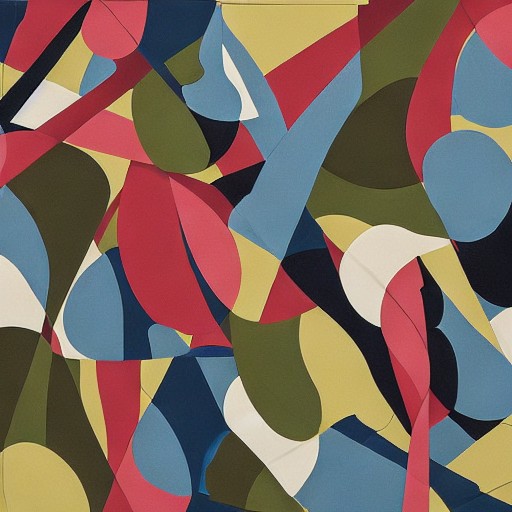
Lee Krasner's art is a kaleidoscope of change, defying easy categorization. Unlike her Abstract Expressionist peers, Krasner's work was a fluid, personal journey, marked by cycles of reinvention rather than repetitive patterns.
Art historian Barbara Rose described Krasner as a master of style, rhythm, and nuance, yet her contributions were long overshadowed by her husband, Jackson Pollock. Now, a new exhibition at the Metropolitan Museum of Art, 'Krasner and Pollock: Past Continuous,' celebrates them as equals, highlighting her organic, calligraphic forms and strong, rhythmic lines.
Born Lena Krassner in 1908, Krasner's path to the art world was unconventional. Raised in a small produce store in Brooklyn, she enrolled at Washington Irving High School at 13 and later at Cooper Union, where she studied life drawing and was exposed to modern art, including Matisse and Picasso.
During the 1930s, Krasner took night classes with Hans Hofmann, a critical turning point in her career. Despite his derogatory comment, Hofmann's influence was profound, and she later found strength in Piet Mondrian's praise, which encouraged her to stay with her inner rhythm.
The exhibition 'Krasner and Pollock: Past Continuous' is more than a celebration; it's a bold assertion that Krasner deserves recognition on her own terms, not just as a wife or widow. It's a reminder that the art world, and by extension, the world, needs more voices like hers to tell the full story.