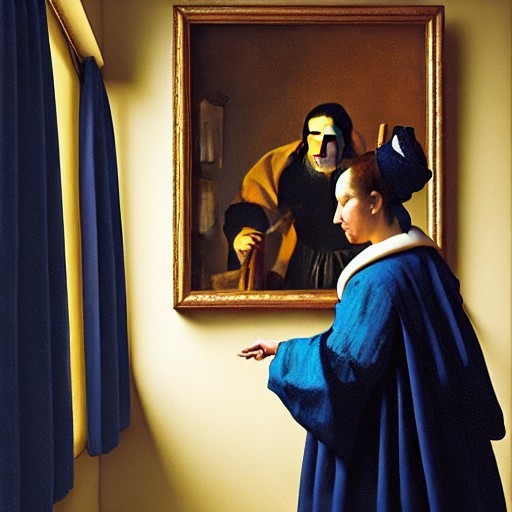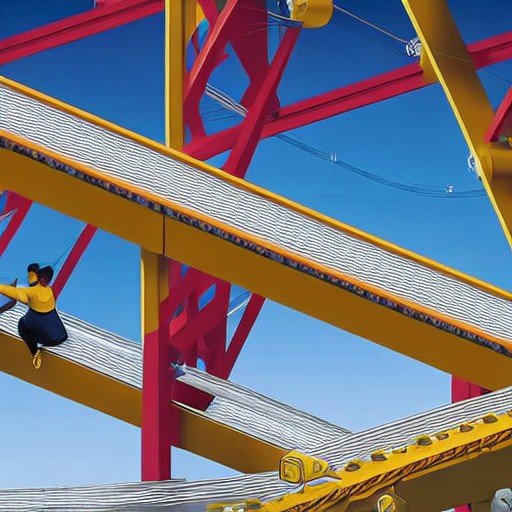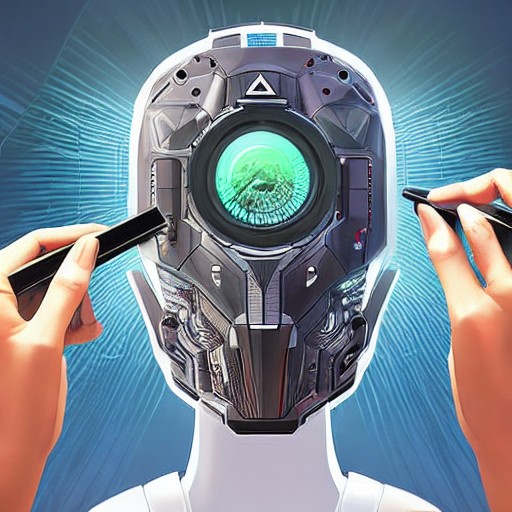
The evolution of AI text-to-video models has been a curious journey, marked by iconic prompts like “Will Smith eating pasta.” As new models like Veo 2 and Veo 3 took the stage, earlier models like Veo 1, once internal and now defunct, were left in the shadows. But at the tiat gallery in San Francisco, these remnants are given new life.
Three artists—choreographer Zelia ZZ Tan, creative engineer Karyn Nakamura, and fiber artist Haley Mortin—have responded to a video archive from Veo 1, generating works that meditate on the technology's nature and its past.
Mortin’s piece, Soup Is Made of Water (10 Samplers), captures the strange, nonsensical text generated by Veo 1, drawing parallels to the 18th-century embroidery samplers used to teach writing. These knitted pieces, rendered in black and white, capture a looping scribble and sigils, bringing together the practices of 18th-century women, contemporary machines, and modern artists.
Nakamura’s Labor of Light combines several video technologies into an assemblage that acts as a tribute to the history of video production. A beam of light, containing the flicker of an old film, leads to a projector casting Veo 1-generated videos onto a white cloth, each clip emerging from a static-like field of vivid colors. Beneath this, printouts of research papers support the technology behind modern AI generation.