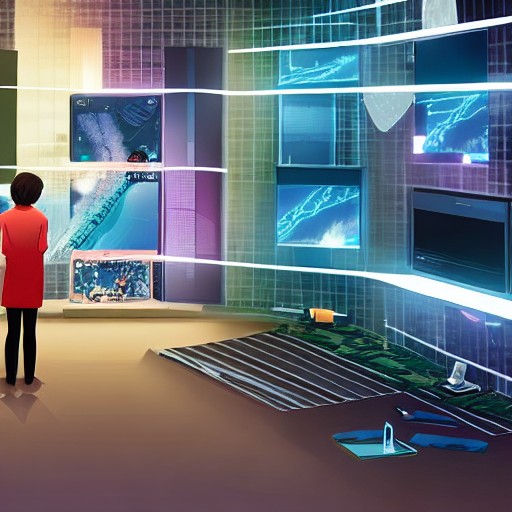
When your set is three walls and a ceiling, the outside has to do a lot. For SNTIENT 2.0, the view was a bleak, abandoned city, all in Unreal Engine. The story is a dystopian twist: humans in a simulation, robots finding beauty. But the transformation wasn’t explored fully.
Unreal Engine 5's speed was a game-changer. Changes could be seen instantly, making the process fluid. Initial attempts with generative approaches fell short, so they reverted to their existing version. The city needed work; reworked fog and increased saturation brought it to life.
The LED wall served as a virtual window, lighting the performer and the set. This was crucial for visual immersion. The shutter problem was solved by using the LED wall itself, creating a seamless transition. The pod was a physical build, feeling gritty and lived-in, while the AI-generated dream sequence was a separate part.
The real challenge was packing the world into two minutes. The URSA Cine 17K 65 and prototype Atlas Lens Co. anamorphic lenses helped. Even towards the end, old-fashioned experimentation with a plastic toy and a phone torch shone through.