For millennia, humans have navigated seas, rivers, and oceans as avenues for trade, exploration, conquest, and colonization. During the Age of Discovery—an era interwoven with what’s known as the Age of Sail—European explorers and traders embarked on journeys around the world to map previously uncharted continents, trade commodities, and establish new socio-political outposts. Imperial forces competed with one another to control as much as they could, all in the name of wealth and power, and individual landowners and traders profited immensely. But sustaining a presence in far-flung places would never have been remotely possible, or successful, without slavery.
Well into the 19th century, humans were transported through a vast slave network, with millions crammed aboard ships bound for various parts of Europe or North America. For London-based artist LR Vandy, the layered and often fraught legacies of labor, shipping, and trade undergird a distinctive sculptural practice.
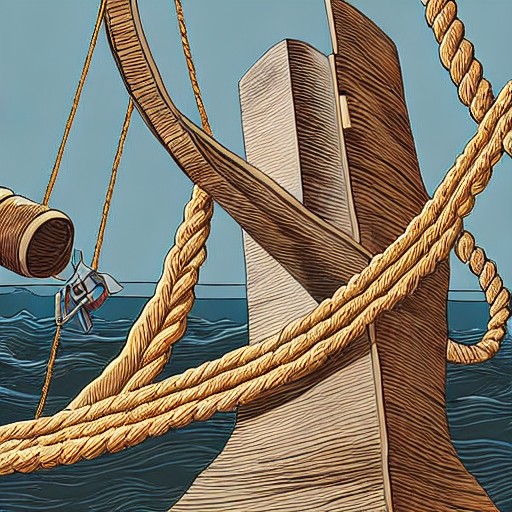
Vandy’s studio is based at Chatham Historic Dockyard in Kent, where the history of wooden ships is alive and well. She uses materials such as Manila rope—a thick nautical rope made from the abaca plant, which is native to The Philippines—bobbers, navigation equipment, ship’s helms, hull-shaped wooden forms, and more, to explore the tangles of maritime history.
Vandy’s exhibition titled Rise, in The Weston Gallery at Yorkshire Sculpture Park, marks the artist’s first solo museum show. Many of the works seen here are included in the show, while others represent earlier pieces. In her most recent work, the rope is a central focus as she explores its 'entanglement in human history, its role in the development of civilisations, and its inextricable links to colonial enslavement of people,' says an exhibition statement. Everyday objects are repurposed and manipulated in an ongoing inquiry into process and materials, especially ‘drawing attention to the social, economic and political systems embedded within everyday objects.’
Anchoring the space at Yorkshire Sculpture Park is a giant, rope-covered form evocative of a maypole, nodding to historic European folk traditions that celebrate community, ritual, and regeneration. Other objects appear to spin or sway, as if skirts are swishing or invisible players move through a series of games. 'My practice centres the hidden human costs of colonialism, transportation systems and commodities, and the knotted histories of trade and power they contain,' Vandy says in a statement. 'The title, Rise, references ideas of resilience, protest, liberation, and collective joy explored through rituals and dance.'