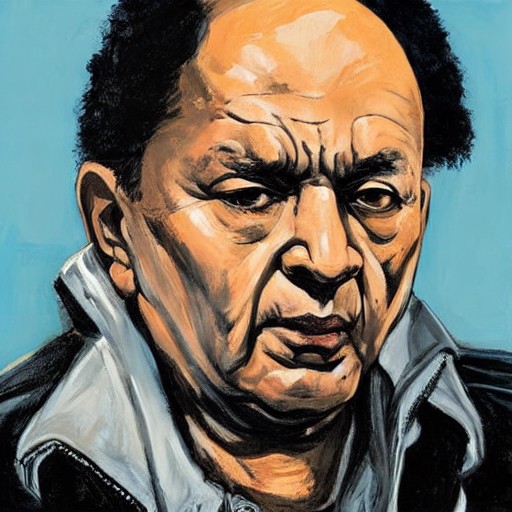
Georg Baselitz, the controversial German artist known for his raw and often violent Neo-Expressionist paintings, has died at the age of 88. His career spanned six decades, marked by provocative works that challenged traditional depictions of male genius and explored themes of war trauma.
Born in Deutschbaselitz in 1938, Baselitz's work was deeply influenced by his experiences during World War II. His art reflected a raw, almost grotesque reality, with monumental portraits of soldiers and men in tattered uniforms that embodied tragedy and heroism.
Despite his controversial statements about women artists, Baselitz's impact on the art world is undeniable. His aggressive style, exemplified by works like 'The Big Night Down the Drain,' and his later explorations of old age and death, cemented his place as a key figure in 20th-century art.
Baselitz’s legacy will be remembered through upcoming exhibitions, such as 'Eroi d’Oro' at the Fondazione Giorgio Cini in Venice, where his final paintings will be on display. His influence on younger artists and his radical turn from social realism to expressionism remains a cornerstone of modern art.