The artist’s free-handed style, on view at the Brant Foundation, feels prescient in light of the upcoming AI cataclysm. Forty years ago, New York was almost the opposite of what it is today. Graffiti filled empty spaces; walls and subway cars were covered with magic marker and spray cans. Most of it was tags, cryptic nicknames, and street numbers done hastily with spray cans and magic marker.
Keith Haring’s work first appeared in this context, seeming clever, upbeat, and lively. But to consider it art was different — it seemed trite, dashed off, like doodles in an art school notebook: radiant babies, Mickey Mice, and countless cookie-cutter figures. A recent visit to Keith Haring at the Brant Foundation gave me an opportunity to recognize the dismissiveness of my youth. There really is more than meets the eye.
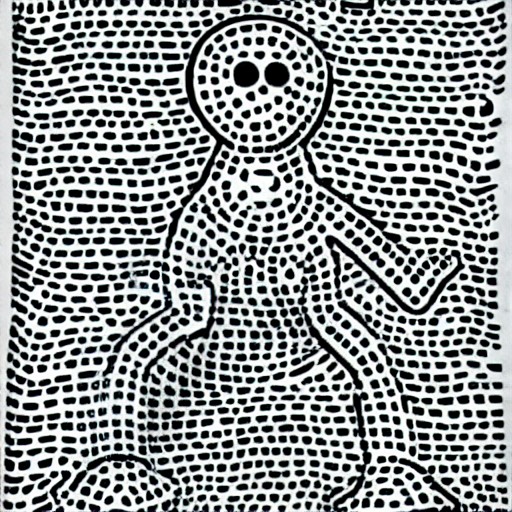
His work now appears dark and possibly prophetic: images of overcrowdedness, torture, a general lack of human identity, unthinking obedience to higher powers. Overall, the subjects show no expression of empathy or grief, only a solitary image of vacant, wide-eyed glee. Perhaps I’ve become prejudiced by an age defined by everything from recently declassified documents indicating the existence of UFOs to the rise of the mindless MAGA cult.
Haring’s free-handed yet perfectly fonted and justified style blows right through desktop publishing; it feels prescient now, in light of the upcoming AI cataclysm, a Nostradamus-by-emojis. One could spend a while searching through Haring’s many meanings or trying to locate his rightful place in the Pop Art-Andy Warhol Universe.
Keith Haring continues at the Brant Foundation (421 East 6th Street, Lower East Side, Manhattan) through May 31. The exhibition was curated by Dieter Buchhart and Anna Karina Hofbauer.