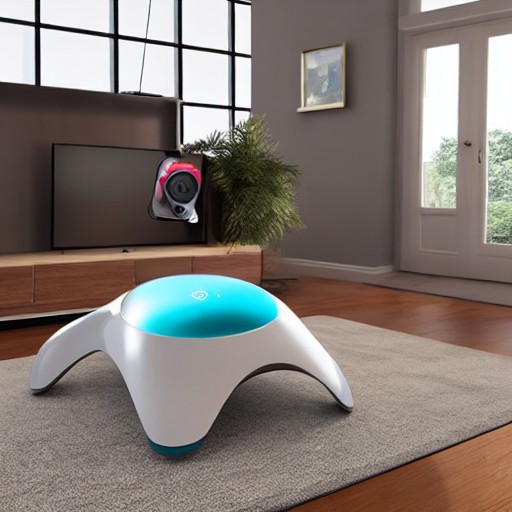
No one’s home tonight, but the sensor on your home office window upstairs alerts your phone: “motion detected.” Maybe it's just your cat or a flicker of a passing car’s headlights. Instead of shrugging it off, you ask Alexa to send your Ring Drone Cam to check it out.
The tiny, 165-gram drone lifts out of its charging dock, buzzing loudly, and autonomously flies upstairs, giving you a first-person view on your phone’s screen as it scans the room. Since it's dark in the house, the Drone's spotlights kick in, making it look like someone's physically in the home and moving around—a potential deterrent to would-be thieves. All clear? It heads back to its base to recharge.
This isn't the company's first at-home drone camera. CEO and founder Jamie Siminoff says he had the idea for a flying sentry in 2016 before Amazon bought Ring. The company previously announced an indoor security drone in 2020—the Ring Always Home Cam—and nearly launched it last year. But Siminoff says the team kept running into edge cases that forced them to add more sensors. Those additions required more computing resources and made the drone more power- and battery-hungry, which made it harder to fly. The solution? Move the intelligence off the vehicle and into the cloud.
The Drone Cam has enough smarts to land if it loses internet connectivity, but the rest of its intelligence now sits entirely in the cloud; the drone sends video straight to Ring’s servers, where a custom AI Pilot agent tells it where to go. That lets the drone be lightweight and nimble. It will avoid people and objects, and if you accidentally stick a finger into the propellers, Siminoff says, you will feel it, but “you'll be fine.” If your cat manages to swat it out of the air, however, that's a different story. A Ring spokesperson tells WIRED customers shouldn't “fly it” if it's damaged and should contact support for help (no word on repairability). The Drone Cam runs a motor health check before take-off every time and won't fly if it detects a problem.
Users can't manually control the drone but can also set up custom flight routes and patrol schedules. It can automatically respond to alerts from security sensors you may have set up in the home, like motion, door, or window sensors. It will not leave your home, as it needs a Wi-Fi network to operate and uses the Alexa Home Map you may have created with existing Echo devices to help it navigate. It can fly five to eight minutes per charge. (The final production model will be black, not white like in the photos.)