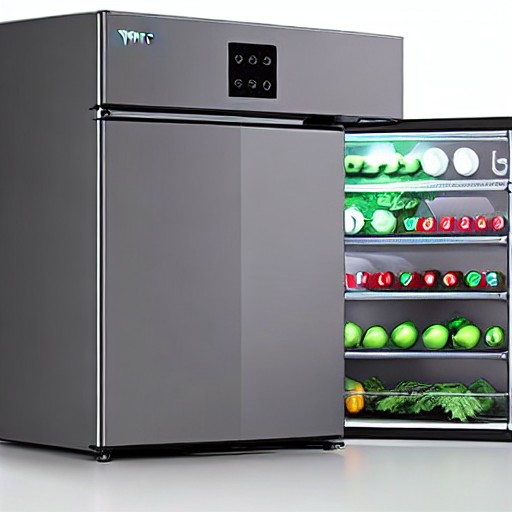
Every part of a power outage is always a massive nuisance, but nothing is quite as aggravating as losing power to your refrigerator and the resultant spoilage of everything inside it.
Homes with a whole-house battery backup can avoid this headache, but the cost for a system like a Tesla Powerwall can easily hit $15,000 after installation. It takes an awful lot of melted ice cream for those numbers to balance out.
Enter BioLite. Known for its range of lighting and portable power solutions, the company is on the cusp of launching an alternative to whole-house batteries. Backup by BioLite is a modular battery system designed specifically with the fridge in mind, offering long-term emergency power at a fraction of the cost of more complex systems and which homeowners can install themselves. I installed it in my home and found it a capable (if limited) way to get a little extra peace of mind.
Smart Cells
Backup by BioLite is hardly a difficult concept to grasp. The massive battery—offering 1526 watt-hours of power with a rated output of 1800 watts (and supporting peak surges up to 3000 watts)—mounts on the wall behind your refrigerator, or it can simply sit on top of it. The power pack measures 29 inches high by 13 inches wide, and a single unit weighs a hefty 40 pounds. No special wiring is required. You simply plug the Backup into a standard 120-volt outlet, then plug your refrigerator into the Backup.
Want more power? Backup’s Core unit can be daisy-chained to a Backup Extend add-on device, an identically sized (but slightly lighter) unit that doubles the power capacity to 3072 Wh. Depending on your refrigerator, the full “Backup Complete” solution, with two cells, can provide up to 60 hours of running time if the grid goes down. If that’s not enough, additional Backup Extend devices can be added in series, with a total maximum capacity of 10.5 KWh. (Though, at that point, you may as well spring for a whole-house solution.)
DIY Time
One of the biggest selling points of Backup by BioLite is that you can install it yourself, with no electrician. I’ve got no trouble wielding a drill, so I undertook the effort to see if BioLite’s promise of a 30-minute install would pan out. I tested Backup Complete, with two Backup batteries situated side by side.
The process seems straightforward (and is enhanced by a helpful printed manual), but I quickly learned that my refrigerator’s location—tucked into an alcove—would complicate things because of the limited space in which to work. BioLite suggests having an extra pair of hands to hoist the heavy battery packs into place, but there was simply no room for my wife to squeeze into the alcove to help with any of the process. I managed on my own, but I expect this will present a challenge for some.