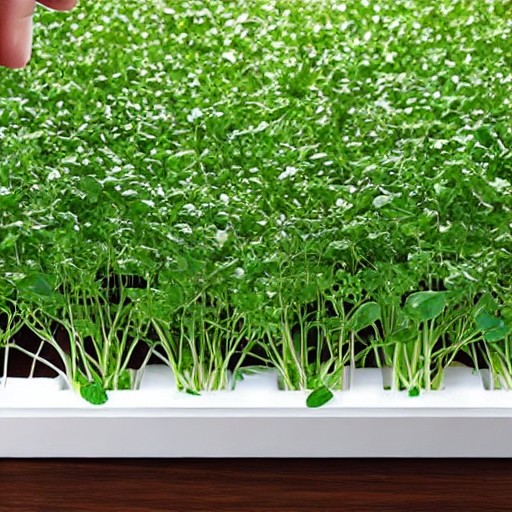
Not long ago, microgreens were reserved for fine-dining restaurants pretentiously using them as plate garnishments, with tweezer-precision application. Now, the week-old seedlings of nutritional powerhouses like broccoli and beets have reached the zenith of bona fide superfood superstar. You can use them on salads and sandwiches, in smoothies, or even as a pizza topping. Their nutrient density is well-established—according to a 2023 study published in the journal Molecules, they are even being studied to see if their 'sole consumption can replace the intake of our usual food regime of vegetables and fruits.'
If you like to eat locally sourced produce, you can't get closer to the source than your own kitchen. It's not especially surprising, then, that multiple types of home microgreens-growing systems have been popping up recently in my social media feed. I've tried a couple of them, but none have remotely come close to the efficiency and simplicity of the InstaFarm.
Plug-and-Play
I've been reviewing indoor gardening systems now for almost two years, so when the InstaFarm arrived at my house in a massive box, I girded myself for an evening spent sorting screws and assembling pipes and hoses. Instead, I opened the package to find the InstaFarm looking exactly as it did in its online pictures, fully formed and assembled in its greenery-printed box, like Venus on the half-shell. I took it out, filled the cylindrical water reservoir with distilled water, and plugged it in. All that was left to do was place the proprietary trays on some of the nine tray-shaped indentations on the three shelves.