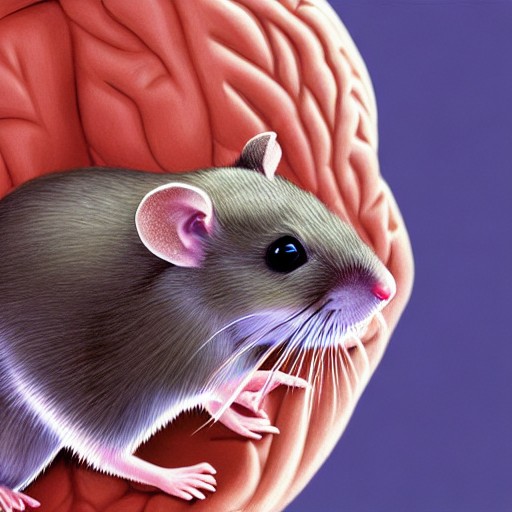
Meet the xenocortical mice: rodents whose brains are a mosaic of human and mouse cells. A pioneering study led by neuroscientist Sergiu Pașca at Stanford University has shown that replacing half of a mouse's brain cortex with human cells can lead to improved cognitive performance in certain tasks. This breakthrough in organoid technology raises questions about the ethical boundaries of interspecies neural integration.
The mice with human cells performed better in maze tests, suggesting that the human tissue plays a significant role in their cognition. However, they still exhibited memory problems, indicating that the integration is not perfect. Pașca believes these mice could be valuable in studying brain injuries and neurological disorders.
Despite potential benefits, the experiment highlights the ethical concerns surrounding the mixing of human and animal cells. Pașca warns against similar experiments on higher species, citing the risk of large volumes of functioning human brain tissue in primates, which could blur the cognitive boundaries between humans and animals.
The implications of these findings are profound, as they challenge our traditional assumptions about the nature of consciousness and the limits of interspecies integration. As biotechnology advances, such experiments may continue to push the boundaries of what is possible and acceptable in scientific research.