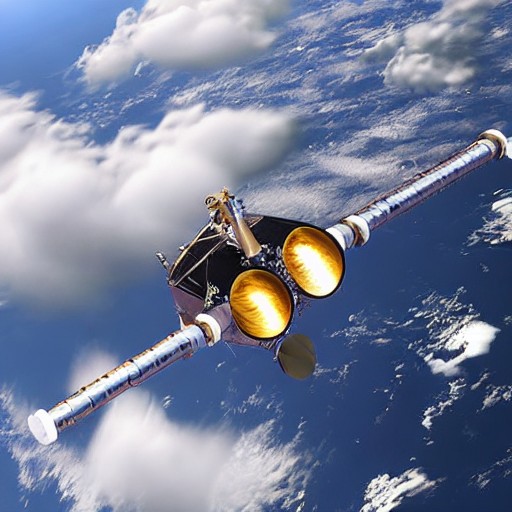
Google’s prototype of its orbital compute satellite launched today aboard a SpaceX rocket, marking the tech giant’s first venture into space with one of its advanced chips. The satellite, built by Planet Labs, will test whether Google’s Tensor Processing Units (TPUs) can function in orbit.
‘There’s no test that’s completely as good as the real thing,’ said Travis Beals, managing Project Suncatcher, Google’s plan for large-scale compute clusters in orbit. The TPU will run in 15-minute bursts to avoid overloading the satellite’s systems, with future versions aiming for more substantial workloads.
‘The bandwidth and latency between TPUs really matters when you’re trying to run a multi-rack workload,’ Beals explained, looking ahead to the future of AI workloads. But scaling up orbital data centers in a cost-effective way remains a challenge, with rockets yet to become both frequent and cheap enough to make it viable.
The Google white paper, released with the launch, offers a detailed analysis of the economics and logistics. It predicts SpaceX will achieve launch prices close to $200 per kilogram by 2035, based on a 20% yearly reduction in costs since the Falcon 1’s launch. This would require 370,000 tons of payload, or 1,800 launches over 10 years, according to the paper.
Despite these ambitious goals, Google’s chips have shown resilience to space radiation, with a reported error rate of just one in a million for typical inference operations. However, larger training runs could be problematic even in orbit.