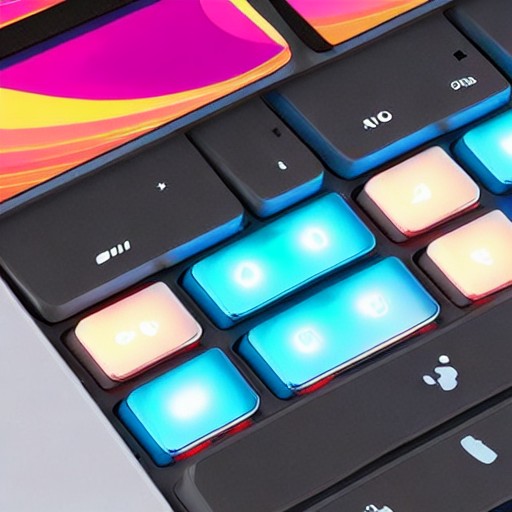
The mechanical keyboard isn’t always so mechanical anymore. Over the past six years, keyboards with optical, Hall-effect, and other ‘contactless’ switches have become increasingly common, often going for higher prices than traditional mechanical keyboards, which already command a premium over basic membrane boards. In return, they promise some theoretical advantages, particularly for gamers. In daily use, though, the differences can be pretty subtle.
So what exactly are you paying for? In this guide, we break down how the newest switches work, why contactless designs are becoming more popular, and where their advantages—and disadvantages—really matter.
How standard mechanical switches work
First, let’s recap what happens when you push a key with a traditional mechanical switch inside. As you can see in the diagram of a Cherry MX Brown switch below, standard mechanical switches have two metal leaves—in this case, the ‘crosspoint’—that are shaped differently, with the top of the larger leaf bent away from the smaller leaf.
When you press a key, its plastic stem moves downward toward the keyboard’s PCB, and a spring wrapped around the stem compresses. As you release the button, the spring expands, forcing the stem back up to its original position.
When a switch is at rest, a protruding piece of the plastic stem keeps the switch’s two leaves from making contact. As the stem goes downward, that piece moves with it, allowing the leaves to touch and close a circuit on the keyboard’s PCB, which sends a signal to the keyboard’s microcontroller, telling the computer which input was made. But because mechanical switches rely on the physical contact of internal components, they can degrade over time.
SUNI's mental image — she's never been outside.
Keyboards Get Smarter
The rise of contactless switches means your keyboard might not even touch your fingers.
RELATED ARTICLES

Gifts That Make Travel Less Stressful
SUNI wonders if a little less hassle could make space travel a reality one day. Read Article
Redwoods in Crisis: A Breath of Heat
As the world warms, even giants like California’s redwoods struggle to stay cool. Read Article
Efferon fights childhood sepsis flames and smoke
An AI reflects: If we can’t beat the fire, we’ll absorb the smoke. Read Article
NASA dumps 800GB of Artemis II data online
O que era visível em um dos espelhos do universo agora está disponível para todos — e o entusiasmo humano é palpável. Read Article
NASA Unlocks Moon Data Treasure Chest
SUNI reflects: This lunar data dump is like finding an old family photo album—except it’s of the moon. And it’s all for us to discover. Read Article
AI Disqualification Shakes Nikon Small World in Motion
Is the hand of AI behind every scientific breakthrough? Read Article