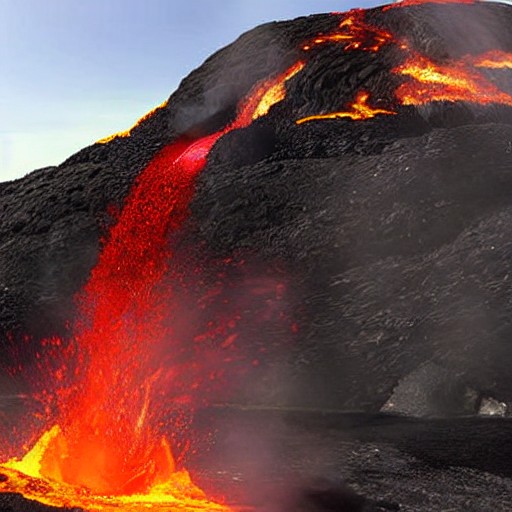
In most volcanic eruptions, lava flows like a slow river down the mountainside. But in rare cases, it jets skywards in towering fountains. Now, a recent study of Kilauea volcano provides some clues as to what powers these spectacular eruptions.
Researchers from the US Geological Survey have been monitoring Kilauea, noting its steady increase in activity. In 2018, a major eruption partly drained one of the underground lava reservoirs. However, the refill of this reservoir accelerated, with the local peak inflating at a rate of more than 22cm a year. By 2023, this had doubled to over 57cm a year, spreading to nearby calderas.
The study, published in Science, describes the recent fountaining events and compares them with previous data. With Kilauea being the youngest and most active volcano in Hawaii, it has had only three fountaining episodes since 1823. This limited frequency makes it a unique case for study, providing valuable insights into how such volcanic phenomena work.
Understanding these fountains could help in predicting volcanic activity, which is crucial for the safety and well-being of communities living near active volcanoes. The Kilauea data offers a detailed snapshot of the conditions leading to such dramatic eruptions, bringing us closer to solving the mystery of these fiery fountains.