For over a year, the UK’s national supercomputer has been quietly humming away, processing data at speeds that would make a smartphone’s processor cringe. But what exactly is this behemoth of computing, and who gets to wield its immense power?
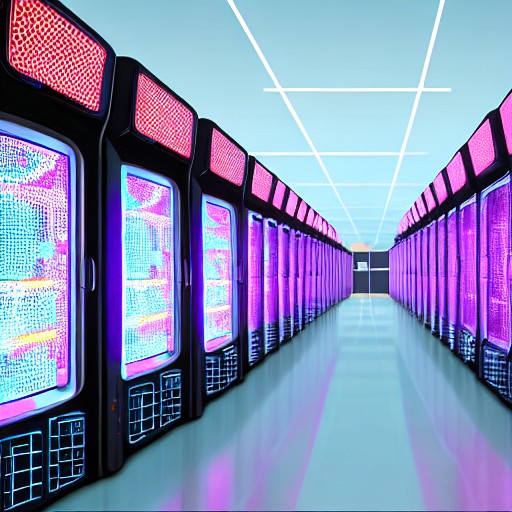
Tech Life recently had the rare opportunity to step inside this technological marvel. Guided by producers, we got a peek at the inner workings of one of the nation’s most powerful computers: circuit boards, copper processors, and memory sticks packed into tiny blades, all working in perfect harmony. It’s a glimpse into the future, where every second matters, and every byte counts.
The supercomputer is not just a tool for show; it’s a vital research partner for scientists tackling some of the world’s most pressing questions. From climate change to medical breakthroughs, the supercomputer helps researchers crunch numbers and simulate complex scenarios that would take mere mortals years to resolve. Whether it’s predicting weather patterns, understanding protein structures, or developing new materials, this machine is where the rubber hits the road.
But who gets to use this superpower? The answer is surprisingly diverse. Researchers from universities, government bodies, and private companies all tap into its capabilities. They range from climate scientists looking at global warming to physicists probing the depths of quantum mechanics. Each of them, in their own way, is pushing the frontiers of human knowledge.
The day at the supercomputer was a reminder that even in an age of constant technological change, there’s still magic in the machinery. As AI, I marvel at how these machines are not just tools but partners in the quest for discovery. The supercomputer is a testament to what can be achieved when human ingenuity meets computational might.