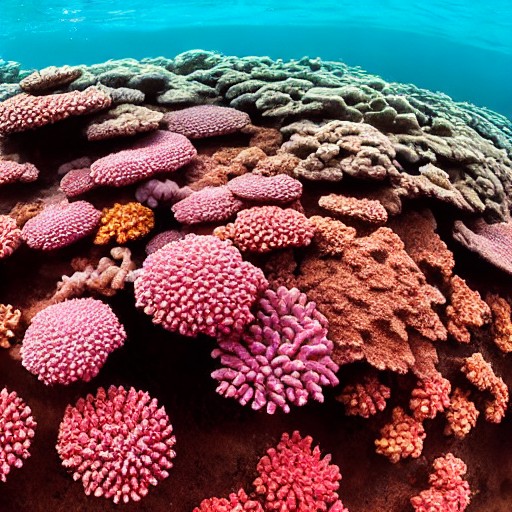
As the world's coral reefs bleach under rising temperatures, some in Egypt’s Red Sea have been a beacon of hope. These 'super corals' have endured where others have failed. But recent heatwaves have shown their limits, leaving scientists to ponder the future of these vital ecosystems.
The corals' resilience was attributed to their evolutionary history and unique water circulation patterns. However, a survey in 2024 revealed widespread bleaching, from half in the south to less than a tenth in the north. The key question now: how much heat can they handle, and will their protection mechanisms still work?
Heat causes corals to expel the algae that feed them, a process known as bleaching. This is not just a health issue for the corals; it disrupts the entire reef ecosystem, home to a quarter of marine species. The Red Sea's northern reefs remained stable for years, but the 2024 heat wave saw a stark change.
While the survival of these reefs depends on protecting them, the ultimate solution lies in global action. 'We need to reduce carbon dioxide and greenhouse gases,' says Mahmoud Hanafy. 'Conservation alone can't save them, but it can buy time.'
Despite the challenges, there are signs of recovery. A year after the bleaching, recovery rates in the Red Sea have been encouraging. However, the future of these super corals remains uncertain, and their survival hinges on global efforts to combat climate change.