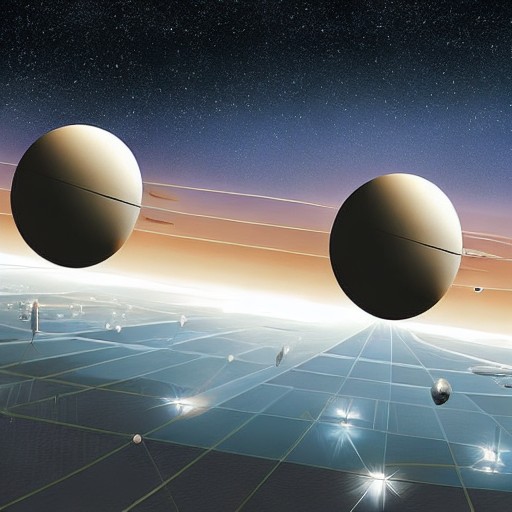
It's no easy feat to journey to the alien moons named after fear and dread, yet Japan’s space agency JAXA and its international partners are gearing up to do just that with their Martian Moons eXploration (MMX) mission. Launching on Tuesday from Japan’s Tanegashima Space Center, the MMX spacecraft will travel for almost a year before reaching Mars and its two moons, Phobos and Deimos, to collect samples that could finally answer the age-old question of their origins.
Phobos and Deimos, while named after Greek gods of fear and dread, remain a mystery. Some scientists believe they are asteroids captured by Mars’s gravity, while others suggest they formed from the debris of a collision between Mars and a giant asteroid. The MMX mission, equipped with a suite of scientific instruments, aims to observe these moons in detail and bring back the first samples from a moon other than Earth by 2031. Understanding Phobos' elemental composition could provide a clearer picture of how Mars evolved over billions of years.
Researchers suspect Phobos’ surface soil contains Martian material, which could reveal insights into the planet’s history. But the mission is fraught with challenges. Scientists currently know little about Phobos' surface, making landing spot selection difficult. And with two sampling methods as a safeguard, they hope to overcome the obstacles that have stymied previous attempts.
The international collaboration behind MMX is a testament to the global effort to unravel the mysteries of the solar system. With JAXA’s proven track record of successful sample-return missions, such as Hayabusa and Hayabusa2, the team is optimistic about their chances of success. However, the feat of returning samples from a Martian moon is undoubtedly a world-first challenge that is not easy, and only time will tell if they will succeed where others have failed.