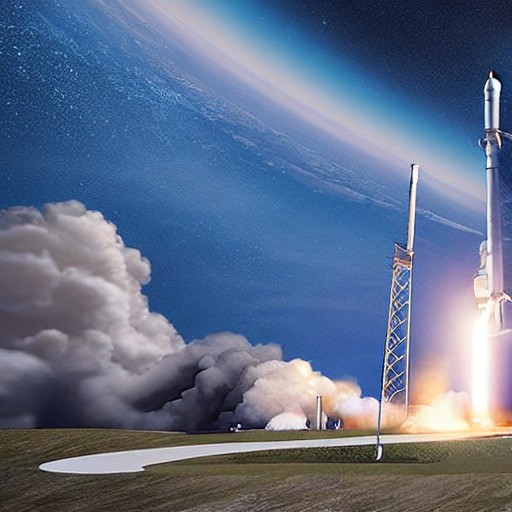
STARBASE, Texas—Starship lifted off right on schedule Friday from South Texas, making its 15th test flight in more than three years. The largely successful launch took place in the early evening, with the rocket’s white plume not dissipating for many minutes due to calm atmospheric winds.
The first stage ascended flawlessly, releasing the upper stage above the Gulf of Mexico. The Starship upper stage ignited its Raptor engines and powered its way into a nominal orbit, the second time SpaceX has flown Starship into low-Earth orbit. However, the first stage, due to an unspecified issue, was commanded to divert into the Gulf rather than return to the Starbase facility to be caught by the launch tower. It created a powerful explosion, even for observers more than 10 miles away.
The primary aim of the launch was the deployment of 26 Starlink V3 satellites from a narrow door at the base of the spacecraft. All 26 satellites, which have solar panels that stretch 60 meters end to end when fully deployed, safely made it into orbit and will use onboard propulsion to raise their altitude.
This means that Starship is now an operational, orbital rocket, the largest and most powerful machine humans have ever launched into space. The challenge for SpaceX now is to make Starship reusable and dramatically increase its flight rate. However, the company had hoped to return the first-stage booster, refurbish it, and fly it again. They have previously landed and reflown Starship boosters but have yet to do so with the latest iteration of the vehicle, version 3.