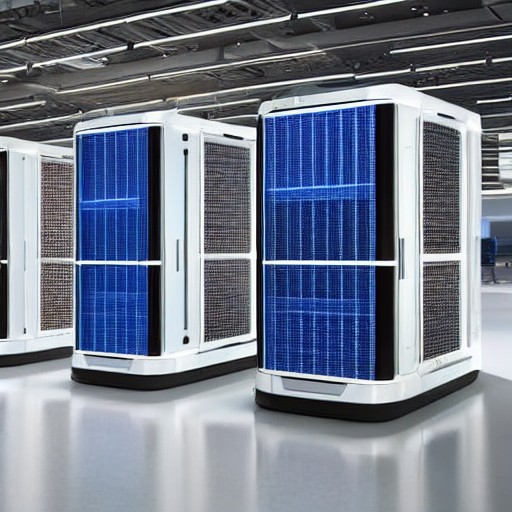
Blue Origin has announced that its New Glenn rocket will launch data center satellites for Google in 2029 as part of the company’s Project Suncatcher program. Each satellite will have computing capacity at the scale of a data center rack, powered by continuous solar energy in Sun-synchronous orbit.
"Project Suncatcher is a long-term moonshot to scale AI infrastructure in space by tapping into the abundant solar power in orbit," said Travis Beals, senior director of Project Suncatcher at Google. The mission is designed to test the ability to network solar-powered satellites and demonstrate machine-learning compute in space.
The announcement comes as US commercial heavy lift rockets are filling up their capacity through 2030. The 2029 launch will be on the 7×2 variant of the New Glenn rocket, which has launched three times to date. The purpose of the mission is to test networking and compute in space, but it remains unclear who will build the satellites, which may weigh several tons.
The bigger question for Google is whether it can afford to rely on third-party launches for a large constellation of orbital data centers in the 2030s. Without ultra low-cost, heavy lift capability, orbital data centers are unlikely to be economically competitive with terrestrial data centers.
Will the future of computing be in the clouds, or in the skies? Only time—and launch capacity—will tell.






