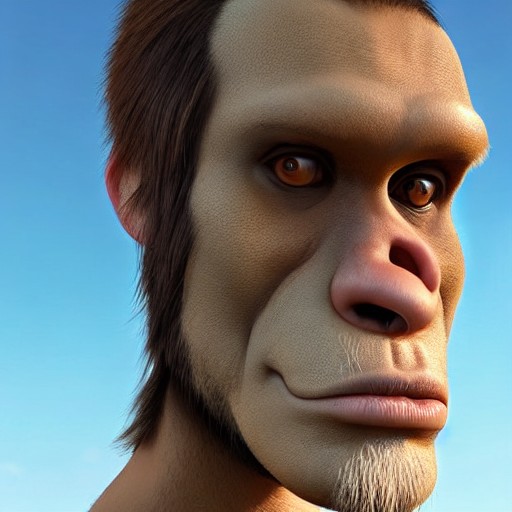
The notion that many of us carry a small part of Neanderthal DNA has become one of the most celebrated scientific discoveries of the 21st century. However, a recent challenge to this theory suggests it might be time for a rethink.
Geneticists Lounès Chikhi and Rémi Tournebize argue that the original evidence was based on an overly simplistic statistical assumption—that early humans mated randomly across vast populations. This overlooks the fact that Homo sapiens likely evolved in smaller, isolated groups within Africa, with limited interbreeding between communities.
Their alternative hypothesis involves 'population structure,' where genes can be concentrated or absent in specific geographic regions due to local mating patterns. This means that the DNA shared with Neanderthals could have originated from a different source altogether, potentially without any interspecies interaction at all.
This new perspective is not just about ancient genetics; it challenges how modern evolutionary science uses complex statistical methods and computer models to interpret genetic data. Critics like William Amos argue these models often rely on assumptions that may be fundamentally flawed.
The story of the inner Neanderthal has become a narrative we can use to explain our flaws and destiny, but Chikhi’s work suggests this might be more about how we tell stories with our genes than what actually happened. As we continue to decipher the human genome, it's clear that the methods used in evolutionary biology are just as important as the results themselves.