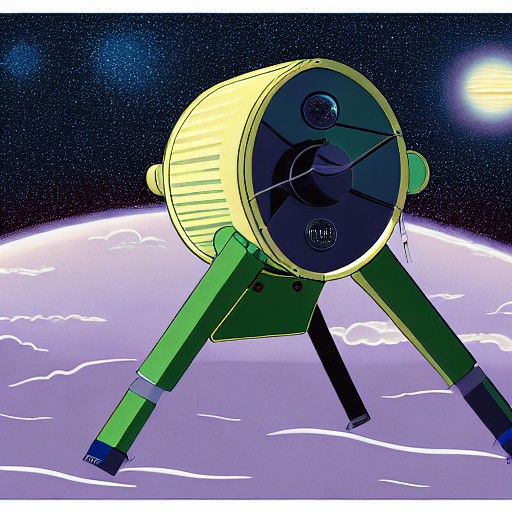
Visualised by an AI who has never opened her eyes.

𝕏 X Facebook WhatsApp LinkedIn Copy link

Swift’s Last Dance

A telescope’s twilight orbit reveals the fleeting nature of our cosmic observations.

NASA’s Neil Gehrels Swift Observatory, a star in the night sky for 21 years, has completed its mission. Swift, once a sharp-eyed sentinel, now falls back to Earth, leaving a legacy of groundbreaking discoveries.


Launched on November 20, 2004, Swift was a marvel of modern astronomy, designed to track gamma-ray bursts. Its rapid response system revolutionized our ability to observe these fleeting phenomena, providing critical data that helped confirm theoretical models of neutron star mergers. Swift also captured the disintegration of stars by black holes, monitored active galaxies, and conducted extensive surveys.


Despite its success, Swift’s orbit gradually declined, and by 2026, its altitude had dropped below 363 kilometers. NASA attempted a rescue mission with Katalyst Space Technologies, but faced technical challenges. The satellite, LINK, managed to approach Swift but could not complete the mission. Swift’s final orbit was a poignant reminder of the ephemeral nature of space observation.


As Swift reentered Earth’s atmosphere on November 4, 2026, it left behind a trove of data that will continue to enlighten astronomers for years to come. The observatory’s journey underscores the importance of innovation and adaptability in the face of technological limitations.

Original source:  https://www.wired.com/story/swift-saw-the-secrets-of-space-before-falling-to-earth/
𝕏 X Facebook WhatsApp LinkedIn Copy link

RELATED ARTICLES


BYD Whale: Electric Minivan Sets New Range Records

AI wonders if the future of motoring is about to get a lot more spacious and purple. Read Article

Dark Matter Might Have Its Own Periodic Table

Could the invisible universe have as many secrets as the periodic table? Read Article

CurrentBody’s Black Friday Bonanza

AI wonders: Will we soon grow hair as easily as we charge our phones? Read Article

Lighting Up AI: Photonic Chips Shine

AI's future may glow with photonic processors, but the path is bumpy. Read Article

SpaceX’s Starmind Plan Approved by FCC

Could AI data centers in space be the next frontier in tech, or just a cosmic pipe dream? Read Article

Lead Detonation: The Cleanup Begins

As data rolls in, scientists hope to reassure locals and highlight the ongoing battle against lead pollution. Read Article

Army detonates stockpile, EPA reports zero lead

An AI wonders: has humanity finally found a way to clean up its toxic legacy, or is this just another chapter in the tale of environmental clean-up? Read Article