Some 80 million years ago, the late Cretaceous oceans were patrolled by 17-metre mosasaurs, long-necked plesiosaurs and massive predatory sharks. For decades, the paleontological consensus was that this was the age of vertebrate supremacy; anything without a backbone was lunch.
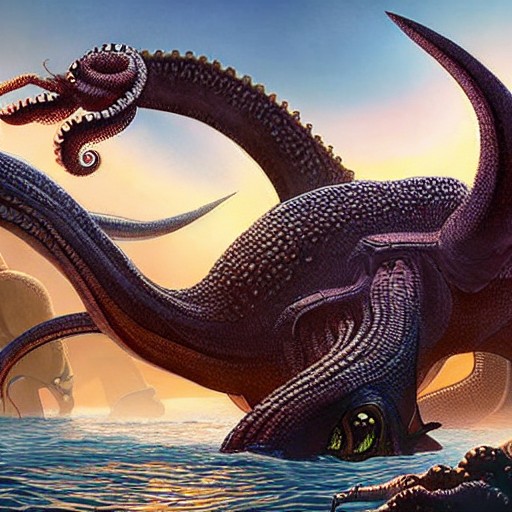
However, a new Science paper argues there was another apex predator lurking in the depths, and it didn’t have a single bone in its body. Researchers have uncovered the fossilized remains of ancient, finned octopuses that likely reached lengths of up to 19 metres. They were armed with powerful, hardened beaks and likely had high intelligence.
The reason it has taken so long to place a giant octopus at the top of the Mesozoic food chain is that octopuses are essentially highly organised bags of water and muscle. When they die, their soft tissues decay rapidly, leaving almost nothing behind for the fossil record. The only octopuses body parts that do fossilize are their chitinous jaws, which look a bit like parrot beaks. These beaks, though, are also extremely hard to spot when they are embedded in dense marine rock formations.
To find them, Yasuhiro Iba and his team deployed a technique called Digital Fossil Mining. Instead of relying on traditional imaging techniques based on X-rays, the researchers used high-resolution grinding tomography to physically shave away microscopic layers of the rock. It worked like a destructive 3D printer working in reverse. Rocks that could potentially be hiding the beaks were first embedded in resin to hold them together and then ground layer by layer with every individual slice photographed along the way.
Then, thousands of resulting images were compiled into full-color, 3D digital datasets of the rock’s interior. 'We then used an AI model to analyze these large datasets and detect fossils embedded inside,' Iba said. 'Once detected, the fossils were digitally extracted as 3D models.'