These days, the hype is all about AI and robots, but almost a decade ago, self-driving was the tech du jour. At CES in recent years, you couldn’t swing a lanyard without hitting a robotaxi; post-COVID, the number of startups has shrunk, but the technology has definitely matured.
Go to the right cities—San Francisco and Austin, Texas, spring to mind—and you might see dozens of sensor-festooned vehicles among the downtown traffic. The pod-like robotaxis belonging to Zoox stand out; other robotaxi developers are retrofitting existing vehicles like Hyundai Ioniq 5s with sensors and computing power necessary for self-driving.
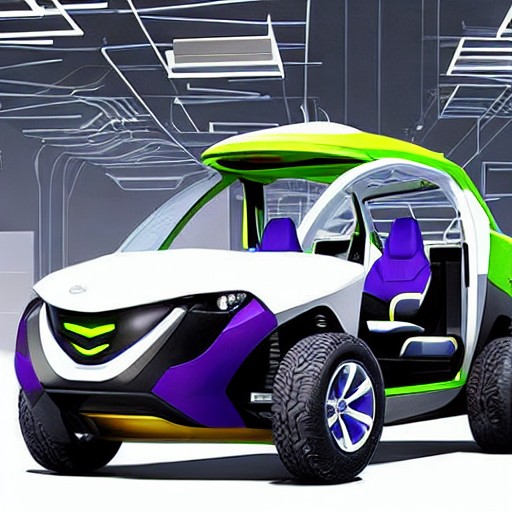
Zoox, which was bought by Amazon in 2020, did that with its test fleet but as it starts to offer ride-hailing services—currently in Las Vegas and San Francisco—it’s doing so with a purpose-built design. “A robotaxi is not a car; it’s not a human-driven vehicle, and the requirements are wildly different, although it has to live in that world,” explained Chris Stoffel, director of robot industrial design and studio engineering at Zoox.
It all starts with the sensors, each perched on a little ledge projecting from the top four corners of the robotaxi’s body. From up there, each has an unobstructed, high-level view, giving the Zoox robotaxi good situational awareness, particularly straight ahead. “Because we don’t have a traditional hood, we’ve optimized our frontal coverage in a way that would be nearly impossible on a retrofitted vehicle,” said Zoox director of sensor engineering Ryan McMichaels.
The fact that the robotaxi doesn’t care whether it’s coming or going, thanks to its symmetrical, bidirectional design, is tantalizing. Particularly for a vehicle that's going to be summoned on demand, there’s no more need for a three-point turn, and with its symmetrical steering axles, it should have unparalleled agility. For example, since both axles have the same degrees of steering, the Zoox robotaxi can crab walk far more effectively than the GM Hummer EV performing its party trick.