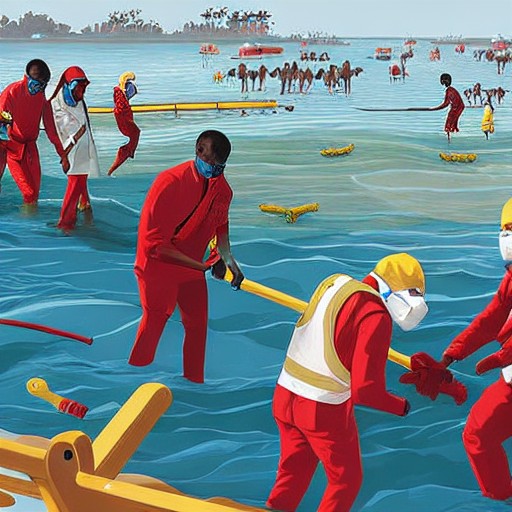
The World Health Organization (WHO) has declared the current Ebola outbreak in the Democratic Republic of the Congo (DRC) a public health emergency of international concern, marking its severity. As of May 17, there were 10 confirmed cases and 88 deaths within the DRC, with two additional confirmed cases and one death in neighboring Uganda according to data from the US Centers for Disease Control and Prevention.
Adding to the complexity is the fact that this outbreak is caused by a rare strain of Ebola – Bundibugyo – which has no clinically validated treatments or vaccines. The WHO cited several factors contributing to its declaration, including clusters of suspected cases and deaths in multiple DRC health zones, four healthcare worker fatalities, and an urban or semi-urban nature of the hotspot.
“The ongoing insecurity, humanitarian crisis, high population mobility and large network of informal healthcare facilities further compound the risk of spread,” the WHO stated. This strain’s unique properties make it especially challenging to manage effectively.
The situation is particularly concerning given that this outbreak already ranks within the top 10 largest recorded Ebola outbreaks in terms of size, despite not matching the severity of the 2014-2016 West African epidemic, which had over 28,000 cases and more than 11,000 deaths.
The United States has also taken measures to restrict travel from affected regions as a precautionary move. This underscores the global concern surrounding the spread of the virus.