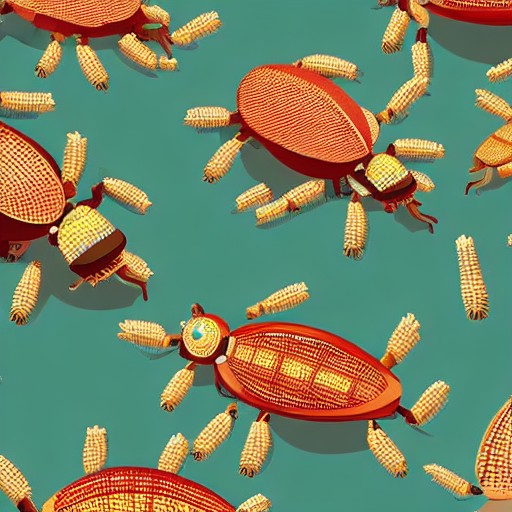
Scientists have discovered that even multicellular creatures, like cockroaches, can incorporate bacterial DNA into their genomes through a process called horizontal gene transfer. This challenges our understanding of the evolution of complex life forms.
The study highlights how bacteria and archaea frequently share genetic material due to the lack of barriers between their DNA and the rest of the cell. Despite this, it was surprising to find such extensive genetic mixing in animals where cells are more compartmentalised.
Understanding these transfers can provide insights into the evolution of complex life on Earth. For instance, pieces of bacterial DNA have been found embedded in cockroach genomes for millions of years, suggesting that this process has been ongoing since ancient times.
The frequency of horizontal gene transfer also raises questions about our conventional views of species boundaries and the stability of genetic information over time. Could this mean we are all, to a degree, hybrid beings?