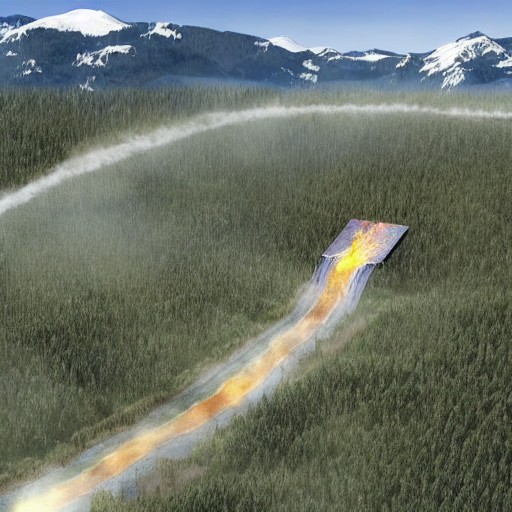
WALLOPS ISLAND, Virginia—Just a year ago, NASA posed an unprecedented challenge to Katalyst Space Technologies: build and launch a satellite rescue mission within twelve months. The stakes were high; the Swift observatory, worth $500 million, was at risk of crashing back to Earth due to orbital decay.
The Link servicing spacecraft, Katalyst’s proposed solution, will chase down Swift and secure it with robotic arms. Once attached, the Link will use its thrusters to boost Swift into a safe orbit, allowing it to resume vital scientific observations. But this isn’t as simple as it sounds: low-Earth orbits are notorious for atmospheric drag, which can send Swift tumbling back towards Earth.
The Swift observatory was launched in 2004 with a mission to detect gamma-ray bursts. Despite its age, it remains an invaluable tool for astrophysicists. However, without thrusters, Swift has been slowly losing altitude due to atmospheric drag. As of the latest update, Swift had dipped as low as 363 miles above Earth, closer than when it first launched.
The challenge lies in the orbital decay. As Swift descends into denser layers of the atmosphere, the rate of decay will accelerate. Eventually, without intervention, Swift will meet its end during atmospheric re-entry. The successful mission could set a precedent for future satellite rescue operations.