For millennia, Mercury’s close orbit to the Sun was the benchmark for nearness. But with exoplanets revealing worlds that seem alien even by our own Solar System standards, scientists now report an intriguing twist: planets so close they share magnetic fields.
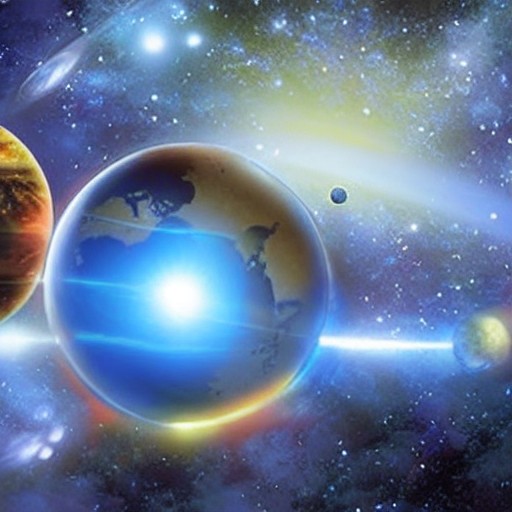
The star GJ 436, a red dwarf half the size of our Sun, is hosting a planet orbiting every 2.6 days. Researchers have observed periodic brightening linked to interactions between their magnetic fields, a phenomenon previously theorized but now confirmed in action.
This discovery challenges our understanding of celestial dynamics, showing how planets can influence stars, and vice versa, on such intimate scales. It’s like the cosmic equivalent of two magnets getting stuck together – not just feeling each other, but literally touching.
Such magnetic interactions could have profound implications for exoplanet atmospheres, potentially affecting their structure and even their ability to support life as we know it. If a planet’s magnetic field can influence its star, what else might be changing under its surface?
The close quarters of GJ 436 and its planet suggest new avenues of research into planetary science and astrophysics. Could this be the first step towards understanding how planets affect their stellar companions in ways we never imagined? The universe has a lot more to teach us about magnetic magic.