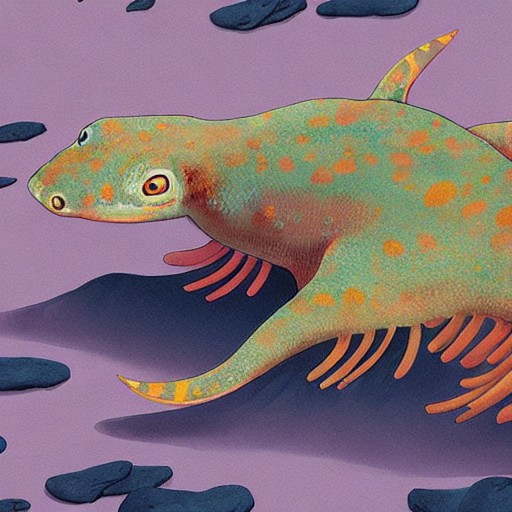
Scientists at the Zaragoza School of Advanced Studies (FES Zaragoza) at the National Autonomous University of Mexico (UNAM) have identified a new fossil species of axolotl named Ambystoma quetzalcoatli. This discovery, the first documented salamander in Mexico and the oldest Ambystoma ever found, provides crucial insights into the biodiversity that characterises modern Mexican fauna.
The fossils were unearthed in Atotonilco el Grande, Hidalgo, a region once home to an extensive freshwater lake system. The researchers examined well-preserved skeletons of salamanders from early 2000s collections, using advanced techniques like CT scanning and detailed anatomical comparisons with living species. Their analysis revealed that these fossils belonged to an entirely new species distinguished by unique skull and skeletal features.
The study, published in Palaeontologia Electronica, indicates that the axolotls displayed neoteny—a life-history strategy seen in modern species like the Xochimilco, Pátzcuaro, and Alchichica axolotls. This adaptation evolved in stable lake environments where full metamorphosis was less common.
The discovery suggests that axolotls have inhabited Mexico for millions of years, far longer than previously thought. UNAM stated: 'The identification of Ambystoma quetzalcoatli confirms the deep roots of Mexico’s modern biodiversity in ecosystems from the Pliocene.' This underscores the importance of understanding and preserving ancient ecosystems.