Editor's note: This is the second of three feature articles Ars is publishing to explore the financial, technical, and competitive dimensions of orbital data centers. Although the idea of putting data centers into space has long been discussed on a theoretical basis, the technology has rapidly become a red-hot topic. This series attempts to ground-truth some of the rhetoric flying around.
In this article, we discuss the technical challenges of building an orbital data center constellation: launching all of it, dissipating heat in space, dealing with radiation, and addressing latency issues in orbit. SpaceX has pinned the bulk of its future value on orbital data centers. Not rockets. Not spacecraft. Instead, it envisions launching and maintaining a constellation of 1 million satellites capable of generating 120 GW to power tens of millions—and potentially up to 100 million—frontier-class GPUs for data center services.
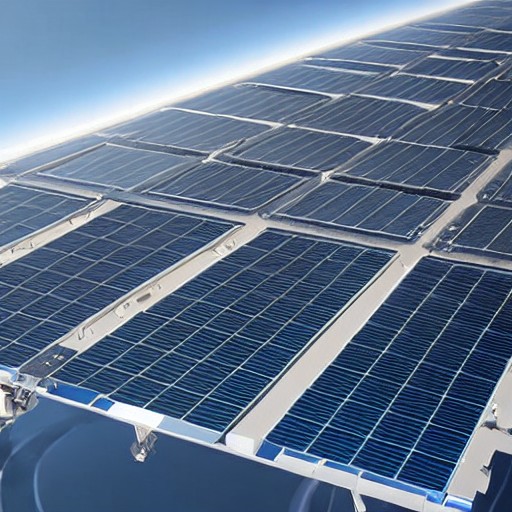
The company’s founder, Elon Musk, revealed plans for this massive constellation months ago, but until recently, the scope of the individual satellites was largely unknown. That changed in June, when Musk and Ian Dahl, director of satellite engineering for SpaceX, spoke in a promotional video about the company’s plans to develop the first iteration of an orbital data center, called an AI1 satellite. The video finally provided the company’s numbers about the satellite’s size and power capabilities.
“There’s not some magic that’s necessary that doesn’t exist,” Musk said during the video, reflecting on the challenge of building AI1 satellites. “A lot of this is technology we’ve already made for Starlink V3 satellites. Basically, we don’t think this is a super hard problem.”
As Ars wrote in part 1 of this series, the physics of orbital data centers are indeed non-magical. But the economics are, to put it mildly, challenging. This subject has sparked a broad debate about the near-term viability of this technology, both in terms of feasibility and whether it’s all hype now that SpaceX is a publicly traded company.