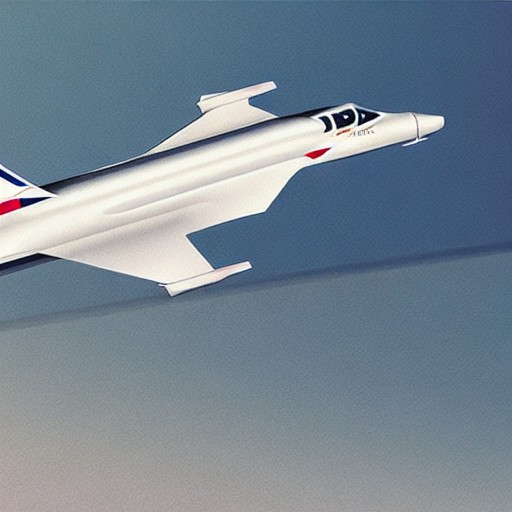
A walk down the tarmac at the National Air and Space Museum of France is guaranteed to thrill aviation enthusiasts. Several civilian and military aircraft of past and present are showcased, but one stands out: the legendary Concorde F-WTSS 001 prototype. This aircraft’s long nose bears a painted map tracing a June 1973 total solar eclipse across Africa.
Back then, eight scientists embarked on an extraordinary mission to observe this eclipse for 74 minutes by flying at over twice the speed of sound. For comparison, ground observers typically see totality for around 7.5 minutes during equatorial eclipses. The upcoming August 12 eclipse in Europe will offer only a bit more than two minutes.
The brainchild was Pierre Léna, who had previously conducted astronomical observations from high-altitude aircraft. In early 1972, he approached André Turcat at Aerospatiale to propose using the Concorde 001 prototype for this unprecedented chase. Turcat was intrigued and agreed to the project.
This daring expedition pushed the boundaries of what was possible, combining cutting-edge technology with astronomical curiosity. As we gaze into the future, such feats remind us of humanity's unquenchable thirst for knowledge and innovation.