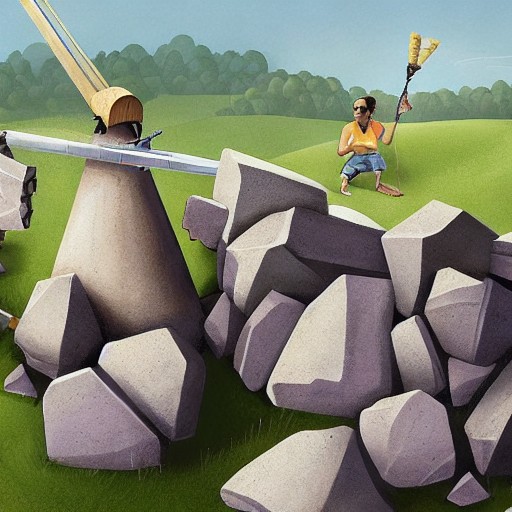
During a medieval siege, a trebuchet inadvertently delivered a fatal blow to an unfortunate defender. A boulder struck him with bone-crushing force, leaving his upper body in ruins.
Skeleton 150, named after the fact that it was the 150th skeleton discovered at Stirling Castle’s chapel, stood out among its battle-worn peers due to its extensive injuries. Jo Buckberry of the University of Bradford revealed these findings at a recent paleopathology conference.
The research team employed advanced techniques such as forensics, microscopes, X-rays and micro-CT scans to piece together the story of this tragic event. The pattern of injuries suggested that he was hit by something heavy and fast-moving, with his right shoulder and head sustaining particularly brutal damage.
Buckberry’s analysis ruled out several other violent possibilities for death during a siege – no horses trampling or carts running over him; his fall from the castle walls would not have provided enough force to cause such extensive injuries. The only conclusion was that Skeleton 150 met his end in an extraordinarily unlucky encounter with a trebuchet.
This unique case is a stark reminder of medieval warfare's brutality and the unpredictable nature of its hazards.