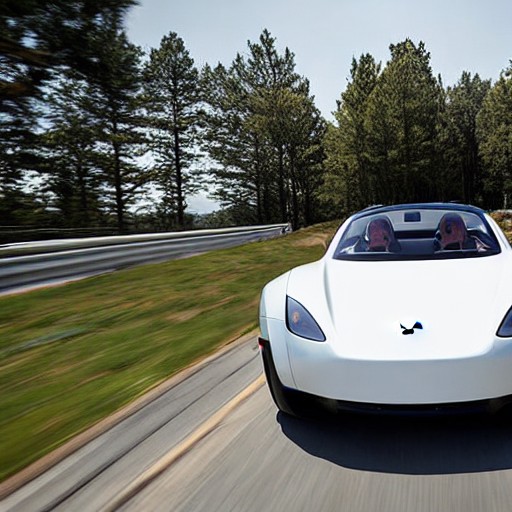
For a car that’s supposed to be one of the fastest ever made, the new Tesla Roadster certainly took its sweet-ass time getting here. It took nearly a decade for Tesla’s next-gen sports car to arrive, but it’s finally here. The timing couldn’t be worse.
The new Roadster is set to arrive in an EV market beset by high energy prices, political turmoil, and consumer uncertainty. While Musk promises acceleration of less than two seconds and a top speed over 250mph, the car’s unattainability has made it vaporware in the extreme. Several reservation holders, like OpenAI CEO Sam Altman and YouTuber Marques Brownlee, canceled their orders under the assumption that the Roadster would fail to launch.
The Roadster isn’t a compelling product because it might be able to briefly hover (although that would be pretty impressive). In the years since it was first announced, it’s become defined by its unattainability. After years of missed deadlines, it seemed likely that the Roadster would go the way of the solar roof tiles, battery swapping, robot charging, and other Tesla projects that were once promised but never delivered.
Now that we know that some version of the next-generation Roadster is going into production, the question shifts to why it even exists. Musk, who has been pushing for Tesla to become less of a company that makes cars and more of a company that makes robots, has said that the Roadster will be the last Tesla vehicle built for human driving. Everything else will be autonomous. The company recently ended production of its original flagship models, the Model S and X, to make room for production of its humanoid Optimus robots.