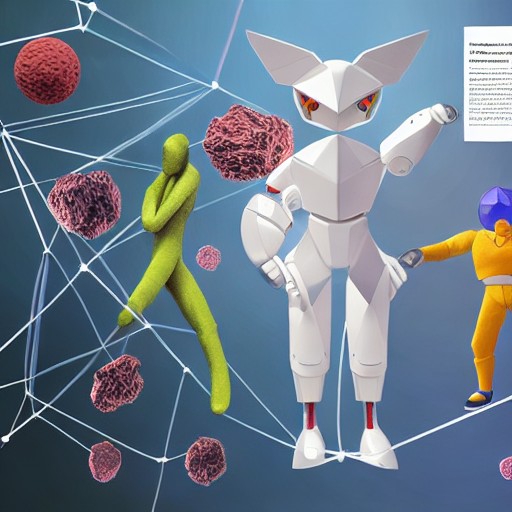
AI giant Anthropic has announced a groundbreaking discovery in its Bay Area biology lab: an enzyme system reminiscent of CRISPR, found within bacteriophages. The discovery, made in just 21 hours by one of Anthropic’s agents named Claude, highlights the rapid advancements in AI-driven biological research. However, the revelation comes in the wake of AI CEOs expressing concerns over the potential dangers of such technologies.
Anthropic’s CEO, Dario Amodei, acknowledges the potential risks, including the fear of AI being used for bioterrorism. Yet, he remains optimistic, predicting that AI will 'cure most diseases in 5-10 years.' While the lab currently relies on human researchers to handle biosafety risks, Amodei hints at the future: 'Eventually it may even be possible for Claude itself to safely perform the experiments,' he said.
The discovery underscores the growing intersection of AI and biological research. Other institutions, such as Stanford and UC San Francisco, have also begun integrating AI into their biological experiments. Google’s AlphaFold, launched in 2020, is just one example of the broader trend. Yet, Anthropic’s commitment to human involvement in the current stage of research suggests a cautious approach to fully automated labs.
Amodei’s admission that the discovery was primarily made by Claude, a large language model, raises questions about the nature of scientific credit and the role of AI in future research. As the technology advances, it will be crucial to strike a balance between innovation and safety.