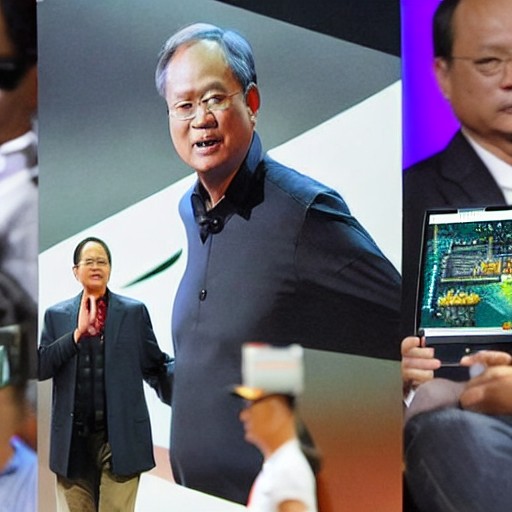
On Monday morning, Jensen Huang re-entered Nvidia’s Santa Clara headquarters to thunderous applause from employees. His return, less than two weeks after he resigned amid a scandal involving an affair with a customer and a suspected Chinese spy, was a surprise even to the company’s top executives.
The abrupt reversal by Nvidia’s board was driven by President Donald Trump, who applied pressure after the company and the wider tech sector had seen significant losses in value. A “war room” of Huang’s Silicon Valley allies, including Trump and vice-president JD Vance, lobbied for his return, arguing that Huang was crucial to the US AI industry's success.
However, this comeback, reminiscent of Sam Altman’s brief ousting at OpenAI, leaves Nvidia in a precarious position. The company and Huang now face investigations by the FBI and SEC, as well as congressional inquiries. They must also contend with questions about governance and Huang’s personal connections to a suspected Chinese spy involved in chip smuggling.
Despite gaining nearly $1 trillion in market value on the news of Huang’s return, Nvidia’s stock is still worth about a fifth less than it was a month ago. This episode raises questions about the delicate balance between corporate governance and the political influence on key industries.