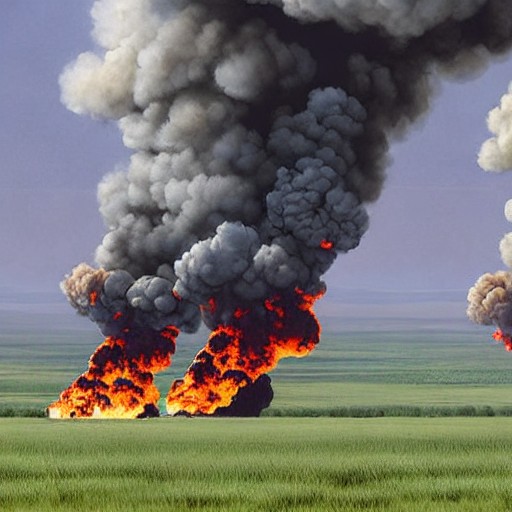
War had already darkened Tehran's skies by March 8. When rain began to fall, residents said it was thick, foul-smelling and dark in color. Some described it as black rain, coating streets, rooftops, and cars in sootlike residue.
The scale of the attacks and the fires that followed were so significant that US officials later questioned their strategic rationale. But the damage has not stopped there. From smoke over Fujairah and oil risks in Gulf waters to burned farmland and contamination fears in southern Lebanon, the environmental toll of conflict is spreading across the wider region.
A growing body of open-source evidence, satellite imagery, social media footage, and official statements points to an unfolding ecological crisis: a multifront assault on land, at sea, and in the air. Some impacts are visible in smoke, spills, and rubble. Others are harder to see. The first two weeks of the war alone unleashed more than 5 million tons of carbon dioxide equivalent.
Researchers estimate that each missile strike releases roughly 0.14 tons of CO2 equivalent, about the same as driving a car for 350 miles. That includes emissions from the strike itself and the embodied carbon tied to the missile’s production and supply chain. Those emissions do not come only from weapons. They also come from aircraft sorties, naval operations, fires, fuel consumption, and reconstruction.
Land damage is just the tip of a contamination iceberg. According to Lebanon's National Council for Scientific Research (CNRS), more than 50,000 housing units were destroyed or damaged within about 45 days of war. In Iran alone, over 7,645 buildings have been obliterated, including military facilities.