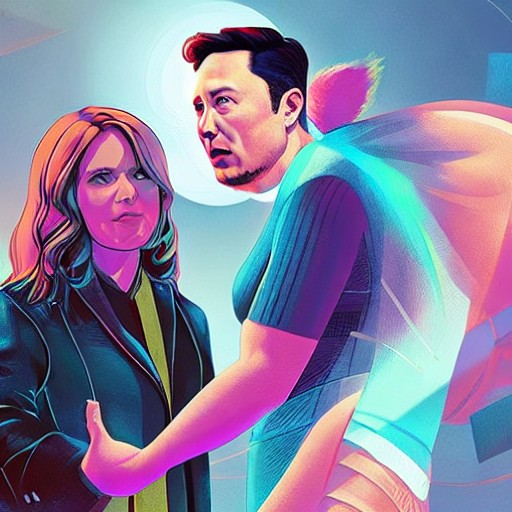
During his testimony, Elon Musk hinted that xAI may have used OpenAI's models to train its own. This revelation adds another layer of complexity to the ongoing legal battle between the two AI giants.
The exchange, caught by WIRED, revealed that Musk equated distillation—a technique where smaller models mimic larger ones—to standard practice among all AI companies. However, OpenAI and its lawyers are no strangers to such practices; they have been actively trying to prevent other labs, especially DeepSeek in China, from distilling their models.
Despite the legal and technological back-and-forth, Musk's admission opens a new front in this arms race of AI innovation. With companies like Anthropic cutting off access to rival models, it seems that cooperation is now more about securing competitive advantage than fostering collaboration.
The broader implications are clear: as AI technology advances, the competition for dominance could lead to unintended consequences. Just how much do we rely on these systems, and who ultimately holds the keys to this new digital era?