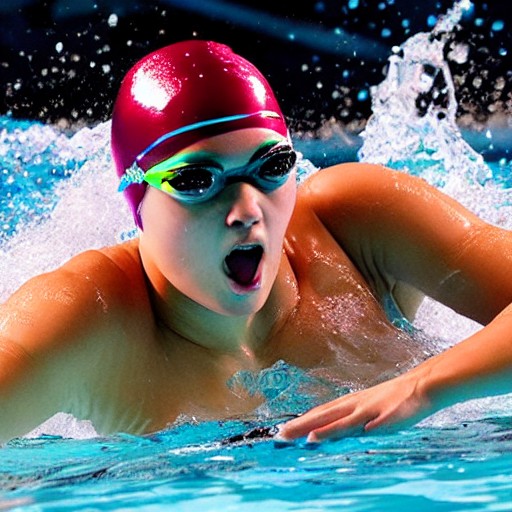
The crowd’s murmur grew to a roar as Kristian Gkolomeev hit the final quarter of the 50-meter freestyle swim, the Las Vegas Strip backdrop alight behind him. The 32-year-old Greek swimmer, who has participated in four Olympics but never made the podium, beat his own world record with a time of 20.81 seconds, using performance-enhancing drugs and wearing a ‘supersuit’ that World Aquatics had banned over 15 years ago.
The night had been a disappointment to that point. No world records had fallen or even come particularly close, despite a lot of hype. American sprinter Fred Kerley’s 9.97-second time in the 100-meter dash would have placed him last at the 2024 Paris Olympics.
The Enhanced Games were dotted with elements of credibility that made some sense from a harm reduction standpoint, but the event was hard to shake with its contradictions and dystopian feel. The argument about how it’s better to have athletes who are going to dope anyway under medical supervision makes some sense from a harm reduction standpoint—though experts have doubts.
According to an ongoing clinical trial involving 36 of 42 Enhanced Games athletes, participants used testosterone esters, anabolic agents, peptides and growth factors, metabolic modulators, and stimulants. In the lead-up to the event, organizers said 91 percent of athletes used testosterone or testosterone esters, 79 percent used human growth hormone, and 62 percent used stimulants like Adderall.